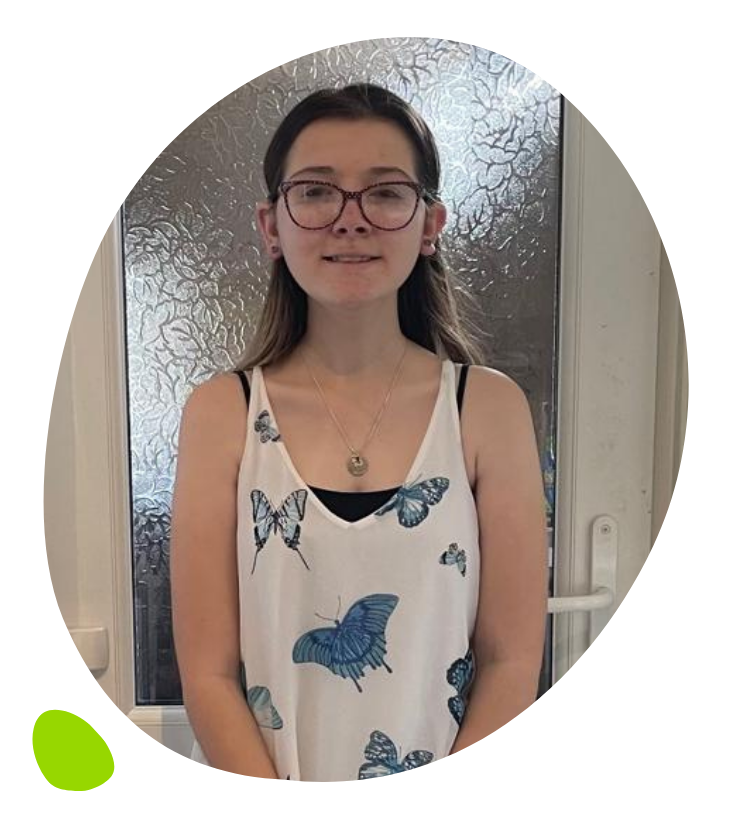
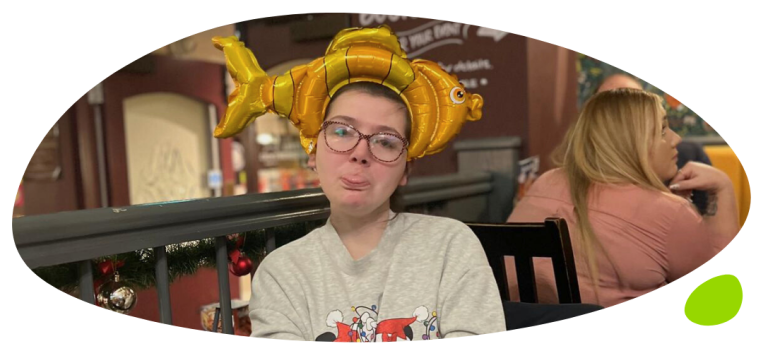
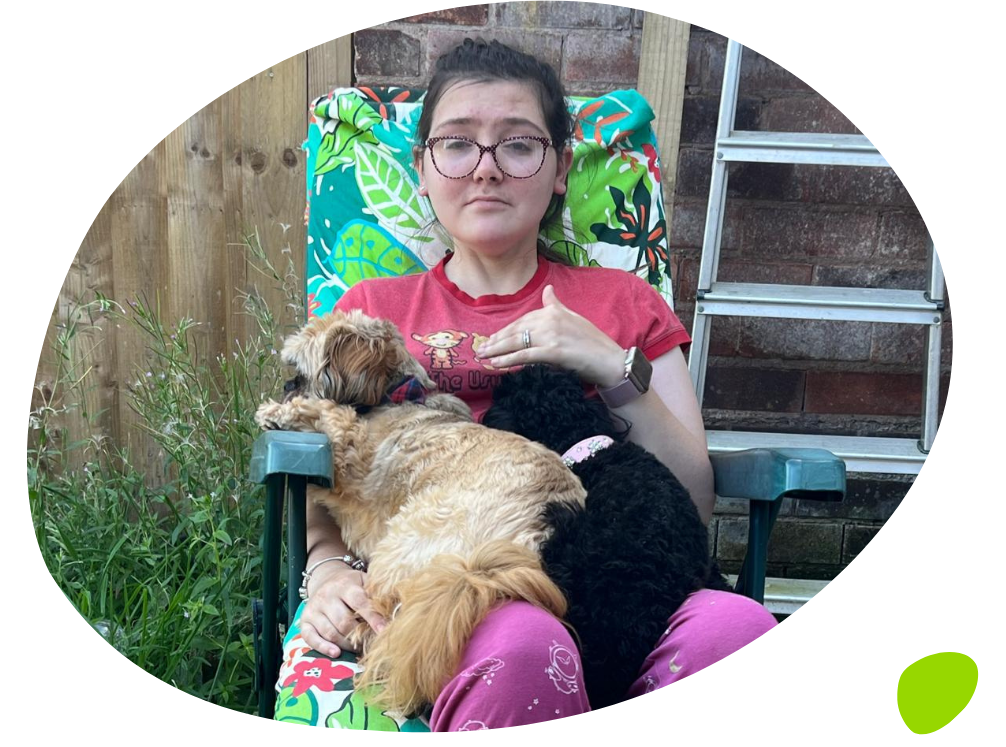
I was born at 37 weeks as I had stopped growing at 35 weeks. I was very small but healthy – I weighed 6 pounds.
I kept failing my hearing tests, but nobody acted on this until I went to nursery where I failed another test. I was referred to the hospital where they told my mum I was in fact deaf and needed hearing aids in both ears.
Not long after, I started to struggle to see properly and found out that my eyes had no movement in them. With my hearing and eye problems, the hospital put me under a paediatric doctor who began tests.
I was diagnosed with mitochondrial disease
when I was 10 years old
… after having lots of blood tests and eventually a muscle biopsy.
My mum and dad had to do a DNA test to find out what kind of mito I had. This was when we found out that I was born with mitochondrial disease, and I’d inherited it from my mum having two genetic faults and my dad having one genetic fault.
My mitochondrial disease variant is caused by the RRM2B gene, which is one of the rarer mito conditions.
At 14, I had my first operation for my mito, which was a double operation as I had my eyelids lifted and a peg feeding tube inserted into my stomach. Then, when I was 16, I had to have another operation to have my cochlear implants fitted on both sides. I had to go two months not hearing anything, as the operation site had to heal.
Everything was going well until I had a major absent seizure which led to me spending three weeks in hospital in September 2023. My mum had to leave work and become my primary caregiver as I could no longer be left alone.
They did lots of tests and found out that I was having problems with my calcium levels, and my heart rate was irregular, so they give me anti-seizure medication and referred me to the endocrinologist department. This led to me having weekly blood tests and calcium infusions for a year.
In October '24 I spent 2 more weeks in hospital
because of my seizures and calcium levels
I finally got to see my consultant at the endocrinology department and was told I had hypoparathyroidism my body no longer makes calcium to keep my bones strong, and this also has affected my heart.
I am now 22 years old, and I enjoy going out on my mobility scooter. I use a stairlift at home to help me access my bedroom and wet room.
I enjoy arts and crafts, playing games and watching TikTok on my iPad, and shopping! I also love colouring and spending time with my nephew.
I want to raise awareness
of mitochondrial disease...
…by getting my story out there. Having my own mito mission is a great way for me to do that.
The more people know about mitochondrial disease
the less alone people who are affected will feel
Get involved and
support Lauren's cause.
Any funds raised by Lauren’s mission goes to My Mito Mission’s central funds to be granted towards research and support projects to benefit everyone affected by mito.
Spreading the word, following, sharing, as well as donating and raising funds are all really helpful and valued. From running a race to holding a bake sale, hosting a collecting can to giving out Lauren’s Mito Mission leaflets – there are so many ways in which you can get involved.
If you’d simply like to donate to Lauren’s mission, choose a way that suits you below.
Be a Part of Project 1000 Strong
Regular donations are the most powerful way to support our vital work, allowing us as a small, high-energy charity to plan and build from a strong foundation.
Strengthening the future of mito awareness, support and research.
We need a 1000 strong team of amazing people to donate any amount from just £2 a month. 1000 is a lot, but – one by one – we know that we can reach it. Find out more here.
Support Lauren by Joining Project 1000 Strong!
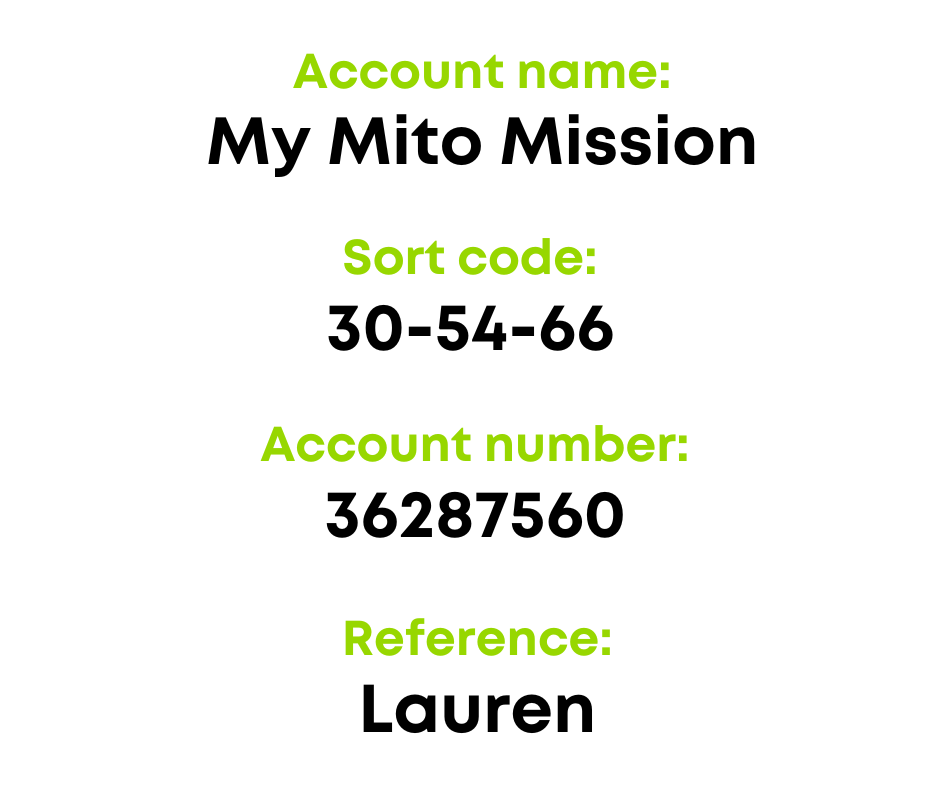
For any other amount or frequency (eg weekly, quarterly, annual), simply contact us
Fundraise for Lauren’s Mito Mission
We’d love your support with our fundraising… and we can provide supporting materials. Just ask!
Set up a fundraising page (Use the orange ‘Fundraise For Us’ button)
Set up a Facebook fundraiser by clicking above and searching for 'My Mito Mission'
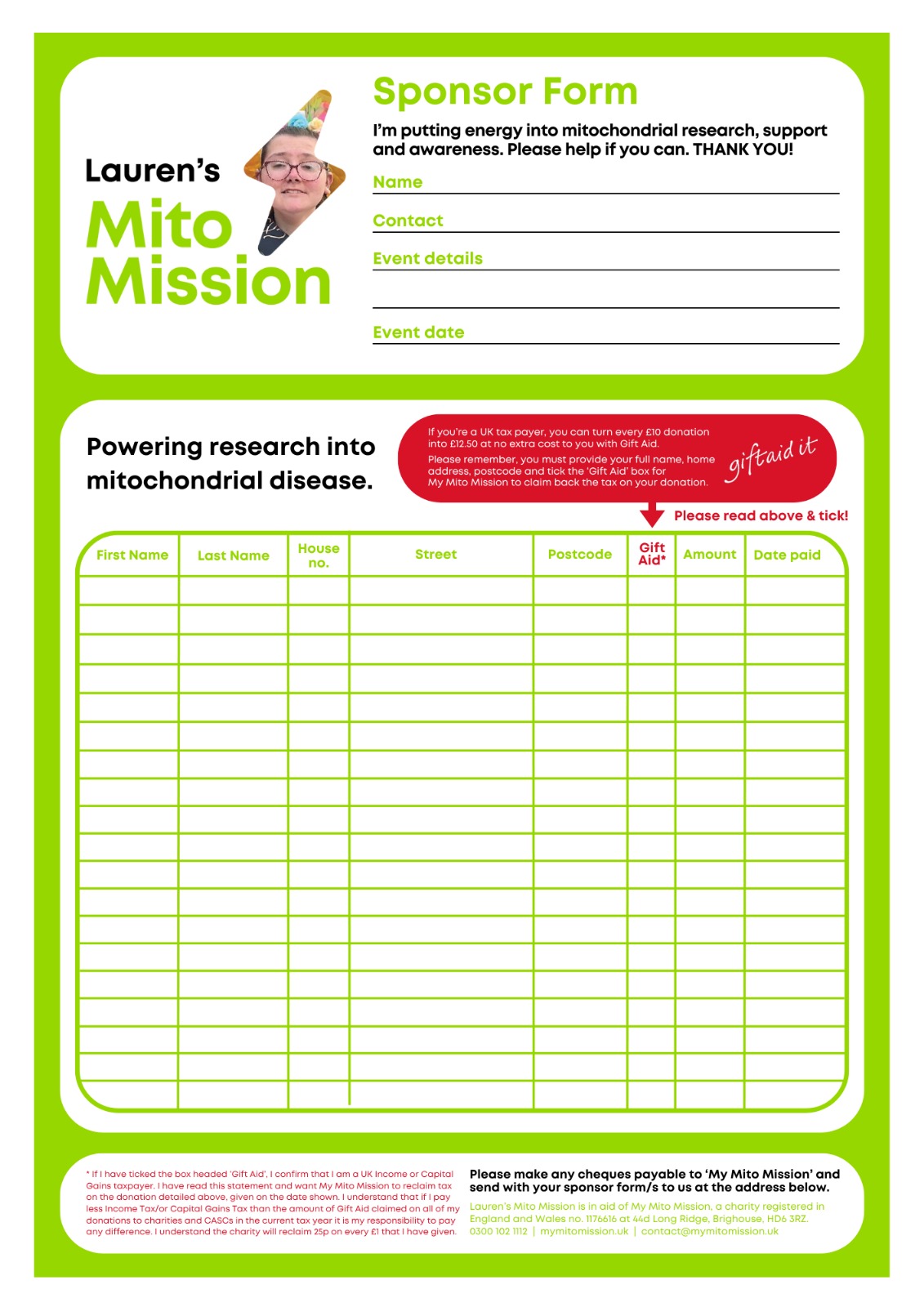
Download a sponsor form to print off by clicking the image above
Support materials such as buckets, cans, leaflets and more
Ask anyone you know to have a Change Box, Small change - Big difference!
Fundraise and shop!
Find our ebay shop easily by clicking 'Save seller'
Visit our second hand clothing shop and follow our account
Support us by purchasing something from our Amazon Wishlist
Support us for free at 100s of stores - click the ‘Find your charity’ button
Click the heart under our charity number to set us as your favourite charity
Other ways you can support us
Nominate Lauren's mission for support at your work or club
Collect saleable, used items that we can sell in our ebay shop
Check out the merch in our shop to raise awareness and funds
Let us talk to your organisation about our cause
Come to our events and help us raise vital mito awareness and funds
We use cookies on our website to give you the most relevant experience by remembering your preferences and repeat visits. By clicking “Accept”, you consent to the use of ALL the cookies.
This website uses cookies to improve your experience while you navigate through the website. Out of these, the cookies that are categorized as necessary are stored on your browser as they are essential for the working of basic functionalities of the website. We also use third-party cookies that help us analyze and understand how you use this website. These cookies will be stored in your browser only with your consent. You also have the option to opt-out of these cookies. But opting out of some of these cookies may affect your browsing experience.
Necessary cookies are absolutely essential for the website to function properly. This category only includes cookies that ensures basic functionalities and security features of the website. These cookies do not store any personal information.
Any cookies that may not be particularly necessary for the website to function and is used specifically to collect user personal data via analytics, ads, other embedded contents are termed as non-necessary cookies. It is mandatory to procure user consent prior to running these cookies on your website.