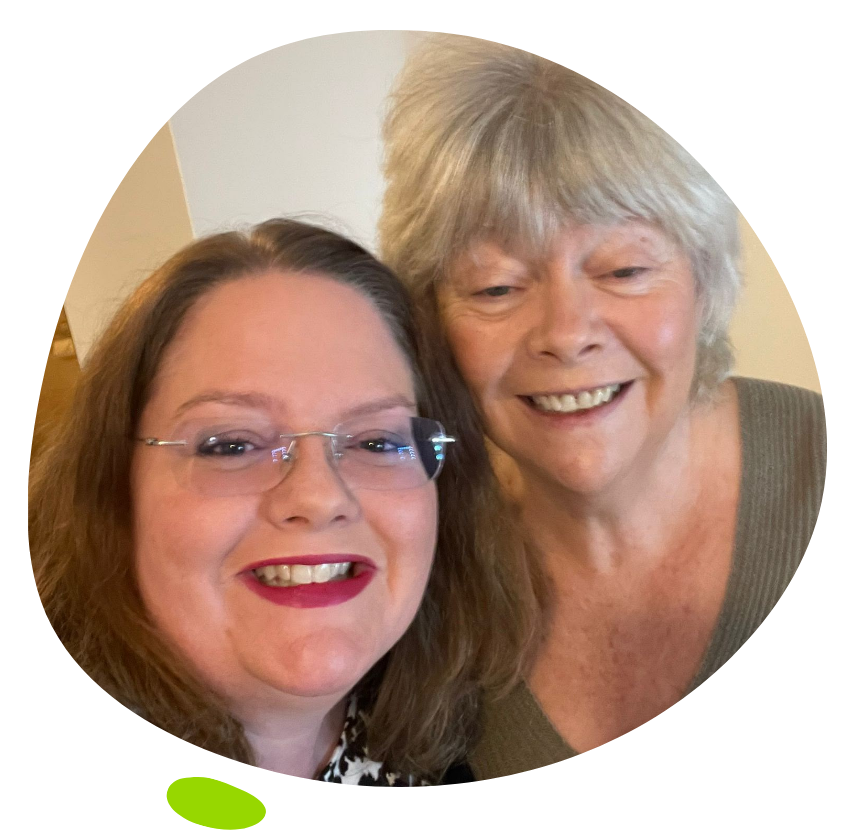
Hi, I'm Julie and my story is an example of how mitochondrial disease symptoms can onset in later life, with no previous indications that anything may occur.
I started to become concerned in 2023 as I knew something wasn’t quite right with my eyes, and I was struggling to work on my laptop. I was feeling tired in a way that I hadn’t before, becoming overwhelmed by the exhaustion some days. I decided to get my eyes tested and that’s when my mito journey began…
The optometrist asked me to follow the pen she was holding, so I did what she asked and that’s when she brought her manager in. They concluded they needed to refer me to an ophthalmologist as my eyes were not tracking left, right, up or down as they should.
After many visits and negative tests for myasthenia gravis – which I thought this could be the answer, since autoimmune disorders do flare with stress and my life has been quite highly stressful – I was advised to have genetic testing done.
…giving me a 1 in 4 chance of having CPEO POLG mitochondrial disease – and I indeed had it.
I wasn’t aware of any family history of mito, but my mum did always complain of tiredness and had quite heavy eyes like mine, so perhaps she had it too.
I was referred to the specialist clinic in Newcastle and had lots of testing done once my diagnosis was confirmed. I was told there is no cure, and the best things I can do are to look after my wellbeing and try to reduce my stress levels. Stress and tension can make my symptoms worse due to the immense energy needed to move the muscles around my eyes. When I am stressed, that energy is directed towards coping with it and therefore my eyes get worse.
…but are probably carriers of the faulty gene which means mito could affect future generations of my family.
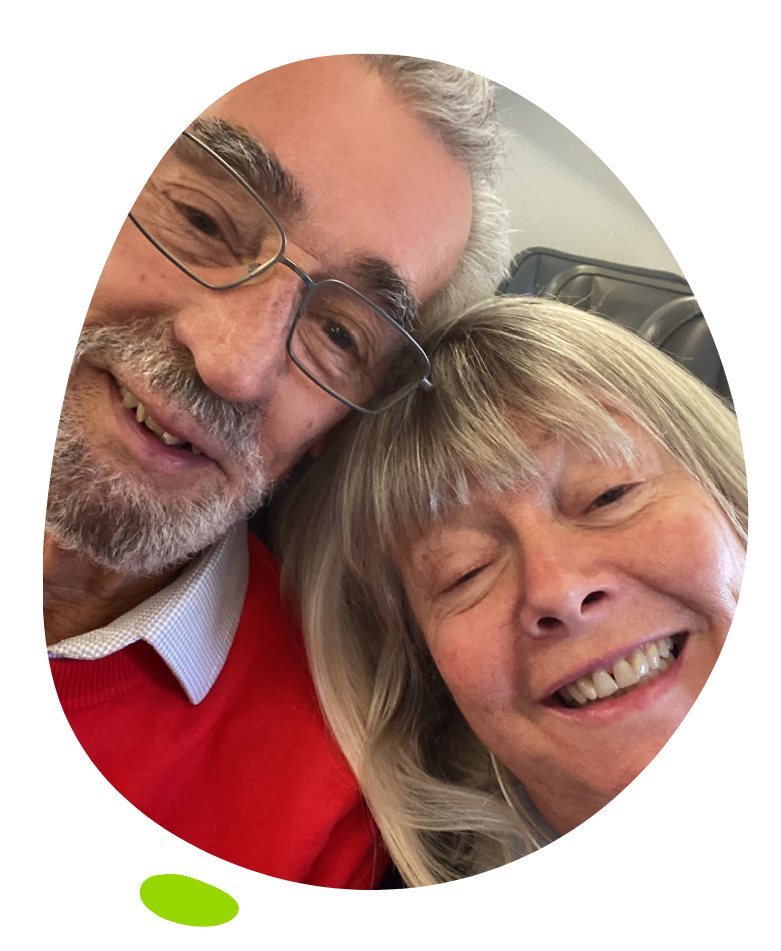
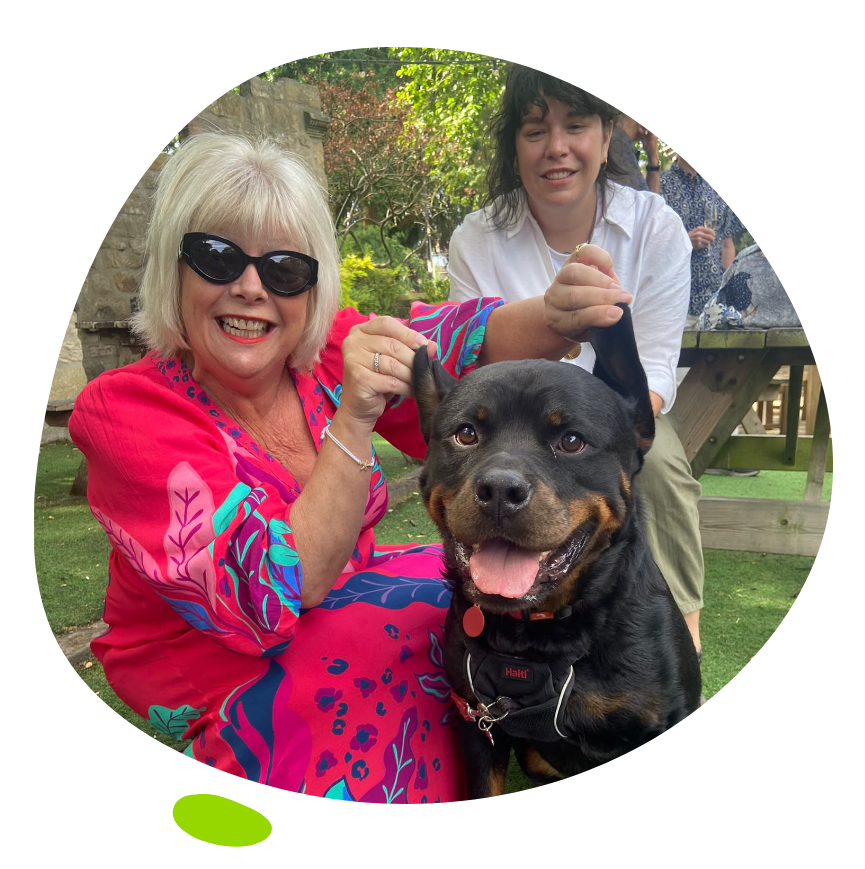
Despite everything, I’m living my best life with my incredible family, my wonderful partner and dear friends. They all keep me smiling!
I’m very sociable, and I love going on holidays with my friends and family. We recently bought a big caravan in Northumberland, which has been so exciting – I love the area and especially enjoy walking, although I do have to conserve my energy carefully these days.
…of mitochondrial disease with people and also an understanding of how it affects me and others.
…and I want to get the word out and help others impacted by mito by sharing my story, so they may feel less alone.
Any funds raised by Julie’s mission goes to My Mito Mission’s
central funds to be granted towards research and support projects
to benefit everyone affected by mito.
Spreading the word, following, sharing, as well as donating and raising funds are all really helpful and valued. From running a race to holding a bake sale, hosting a collecting can to giving out Julie’s Mito Mission leaflets – there are so many ways in which you can get involved.
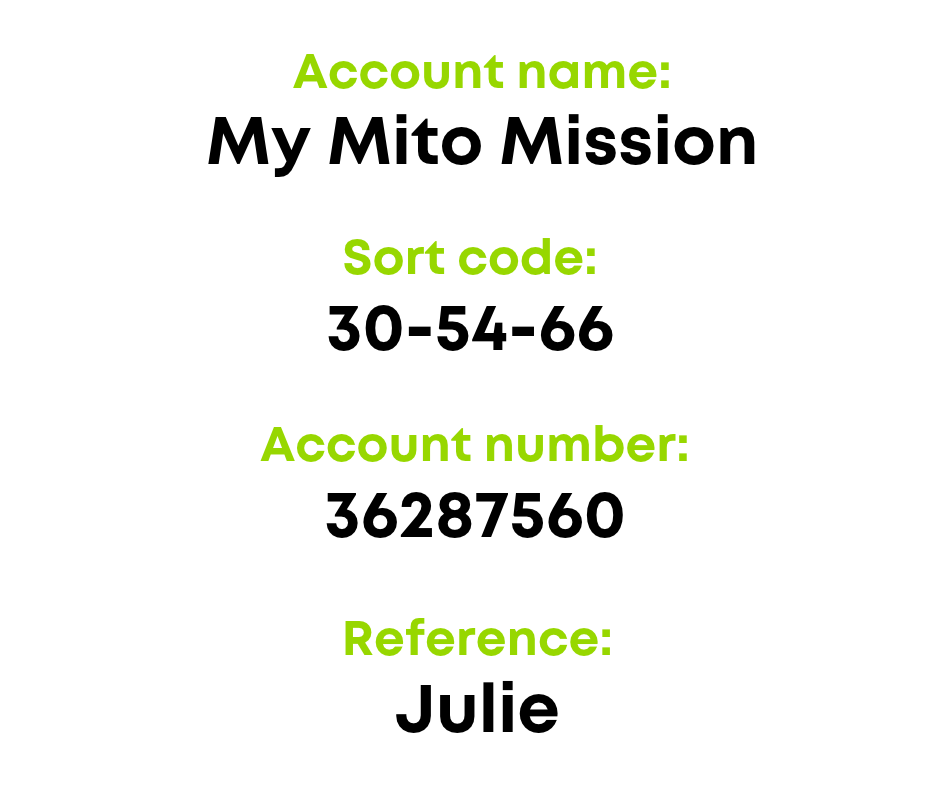
If you’d simply like to donate to Julie’s mission, choose a way that suits you below.
Regular donations are the most powerful way to support our vital work, allowing us as a small, high-energy charity to plan and build from a strong foundation.
We need a 1000 strong team of amazing people to donate any amount from just £2 a month. 1000 is a lot, but – one by one – we know that we can reach it. Find out more here.
For any other amount or frequency (eg weekly, quarterly, annual), simply contact us
We’d love your support with our fundraising… and we can provide supporting materials. Just ask!
Fundraise and shop!
Other ways you can support us