
Daisy's story shows how difficult diagnosing mitochondrial disease can be and how long this process can take. After 6 years and seeing lots of different medical professionals, Daisy was eventually diagnosed with mito through genetic testing via the 100,000 Genome Project...
Daisy was born in 2016, and I noticed that she had quite a poor sucking reflex, but otherwise she was very healthy and normal. Around 12 weeks, I noticed she wasn’t yet reaching out for her toys and other things. Because I have two older kids, I suspected something wasn’t right.
I spoke to our health visitor, and she wondered if Daisy couldn’t see properly. I naturally went down a rabbit hole of researching what could be wrong, as the referral took such a long time and we just wanted to know what was going on.
Eventually we went to a private doctor, who referred Daisy to an ophthalmologist.
So many other conditions were ruled out, and her doctors essentially said they didn’t know why these things were happening to her. They gave us physio, and treatment for her vision issues, but nothing as to what the root cause was.
Daisy has very low muscle tone, and she didn’t sit up til she was one, or walk til she was three. Her swallow and vision are massively affected, and she struggles with language. She couldn’t grasp things for a long time, especially with her right hand.
We eventually were able to access genetic testing to get to the bottom of her symptoms. Through the 100,000 Genome Project, one and a half years later, at 4 years old, she was found to have PDHA1 deficiency, a form of mitochondrial disease.
We were referred to the metabolic disorders department, and again I ended up researching her condition like mad to try and learn more about what had, and could, happen to Daisy. It was really frightening to see stories of other children experiencing things like seizures due to mito.
She was, however, able to fight off infections well, which can often be a huge complication for those with mito.
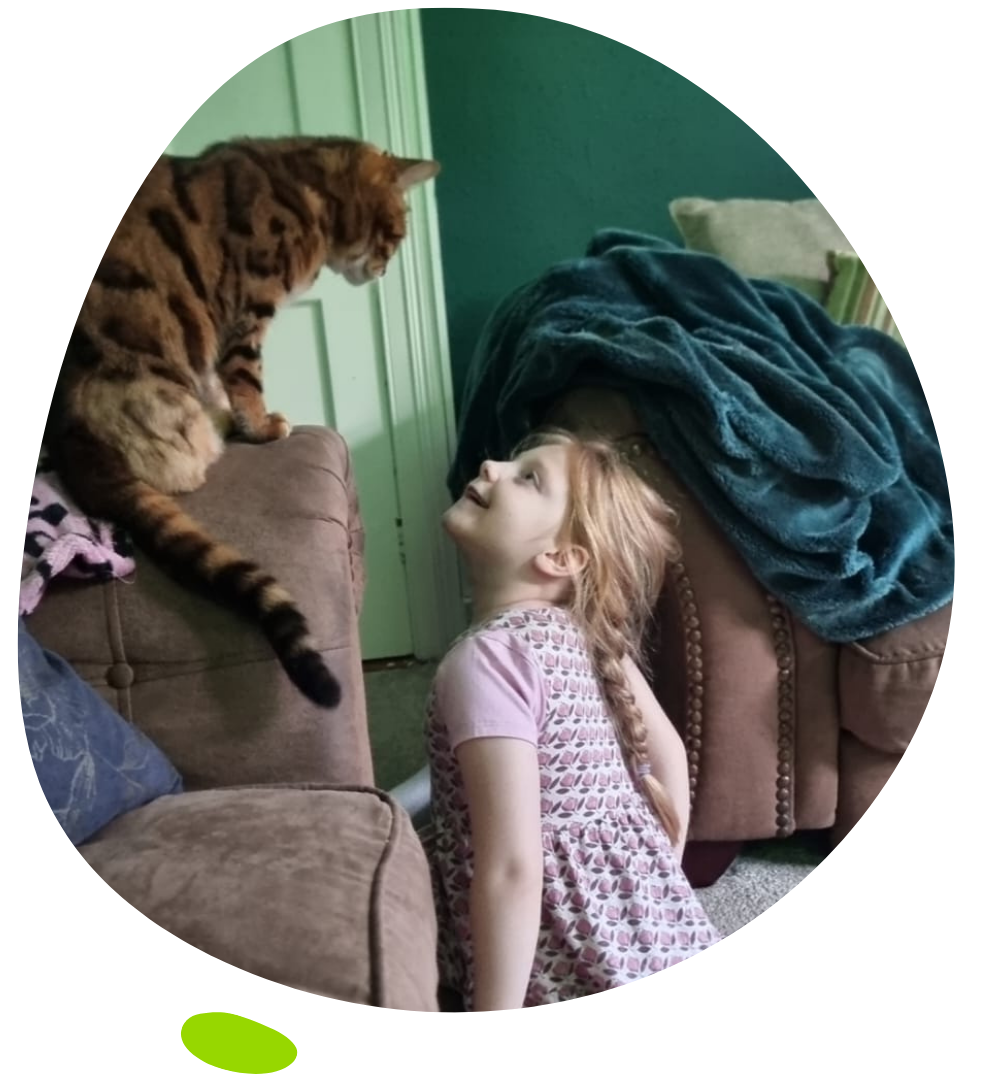
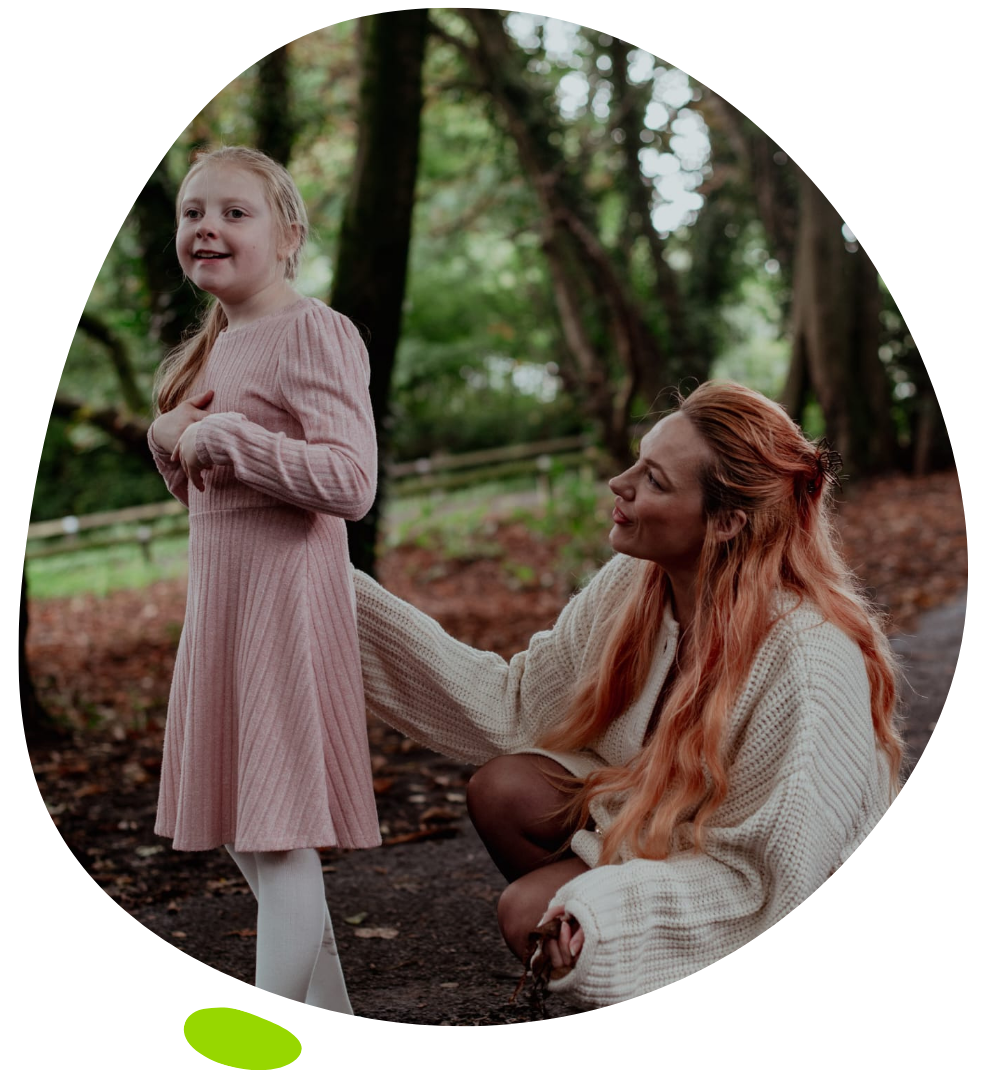
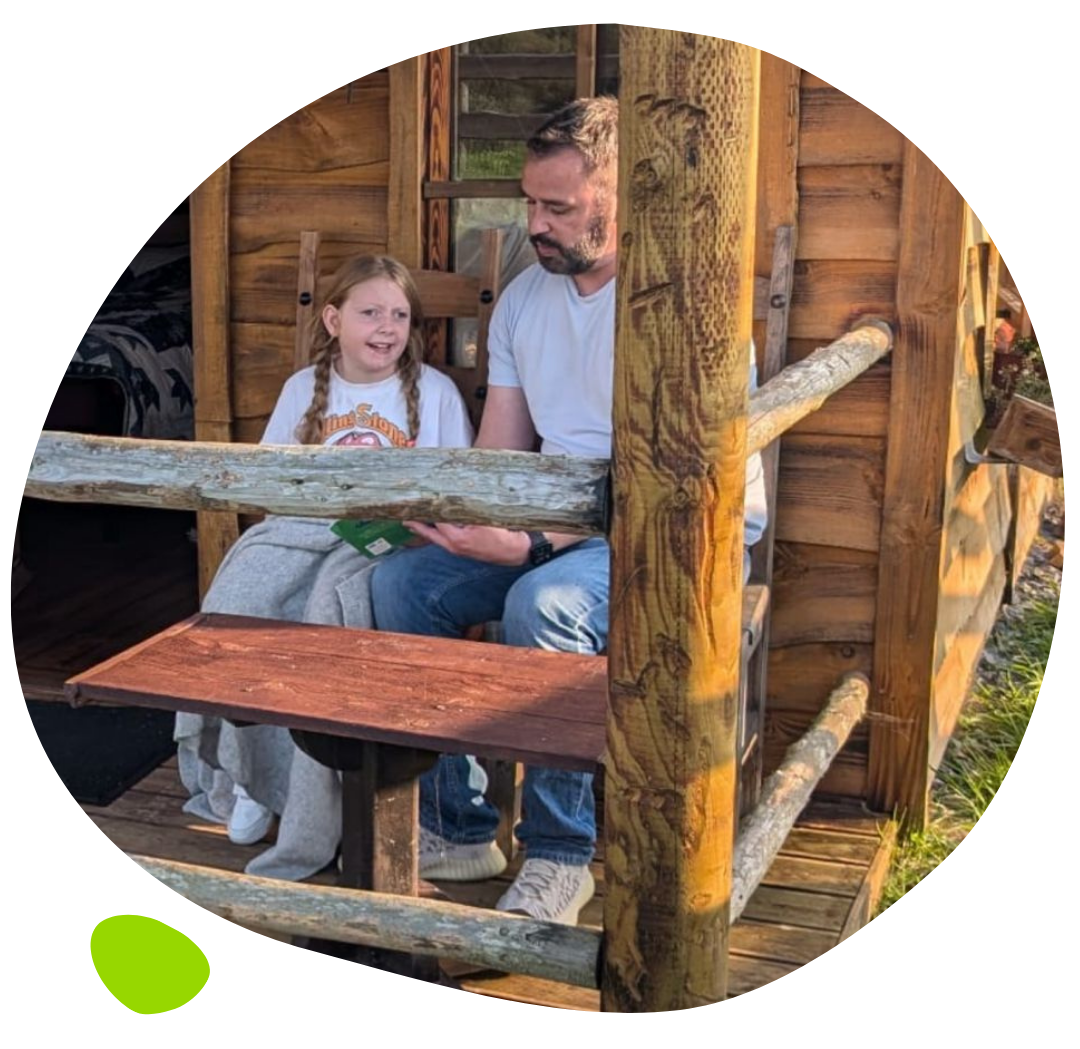
Daisy is a very happy girl, who lives a full and exciting life despite her difficulties. She’s very sociable, cheeky and funny. She still has speech difficulties and has cerebral visual impairment. Her eyes are unable to focus, especially when there’s a lot going on. I worry about the future for her, and the unknown of what could happen, but I’m so grateful.
She loves books, especially turning the pages, and we discovered this year that she can read! She also likes watching people getting their nails done online. She has two older siblings, Maddison and Jayden.
into mitochondrial disease. I hope that we can help raise some funds towards this.
There needs to be more awareness, and I think genetic testing should be carried out much more often at birth.
Any funds raised by Daisy’s mission goes to My Mito Mission’s
central funds to be granted towards research and support projects
to benefit everyone affected by mito.
Spreading the word, following, sharing, as well as donating and raising funds are all really helpful and valued. From running a race to holding a bake sale, hosting a collecting can to giving out Daisy’s Mito Mission leaflets – there are so many ways in which you can get involved.
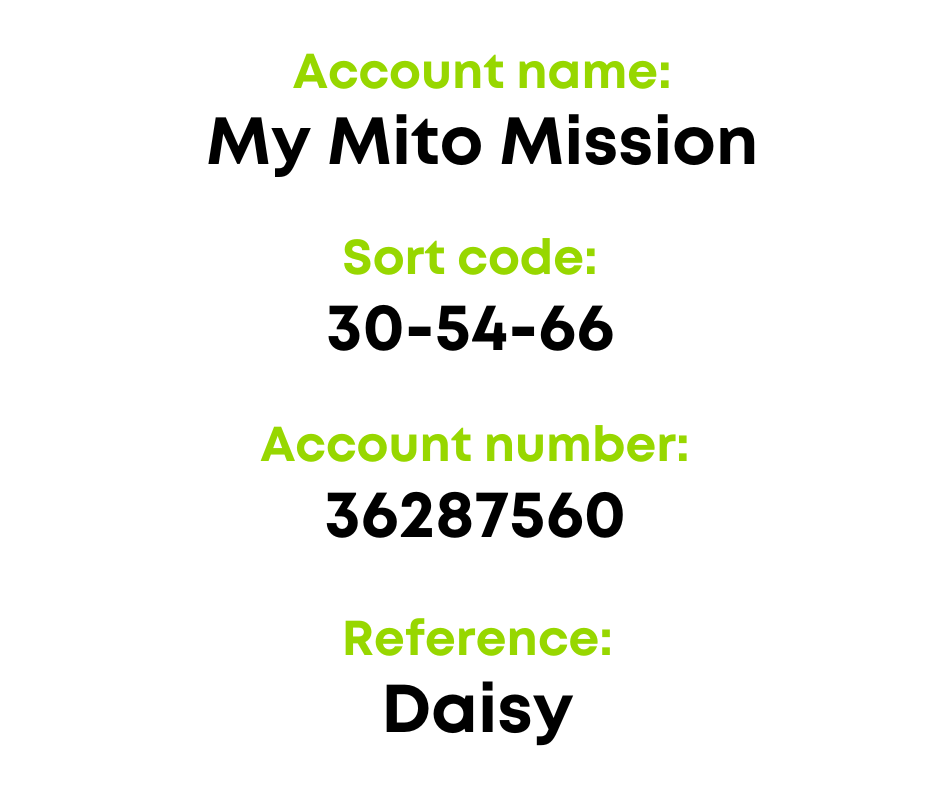
If you’d simply like to donate to Daisy’s mission, choose a way that suits you below.
Regular donations are the most powerful way to support our vital work, allowing us as a small, high-energy charity to plan and build from a strong foundation.
We need a 1000 strong team of amazing people to donate any amount from just £2 a month. 1000 is a lot, but – one by one – we know that we can reach it. Find out more here.
For any other amount or frequency (eg weekly, quarterly, annual), simply contact us
We’d love your support with our fundraising… and we can provide supporting materials. Just ask!
Fundraise and shop!
Other ways you can support us