Receiving a diagnosis of a genetic disorder is a huge shock - especially when there is no history of it in a family. Find out how this happened to parents Elaine and Leigh...
As told by mum, Elaine, August '23 updated March '24
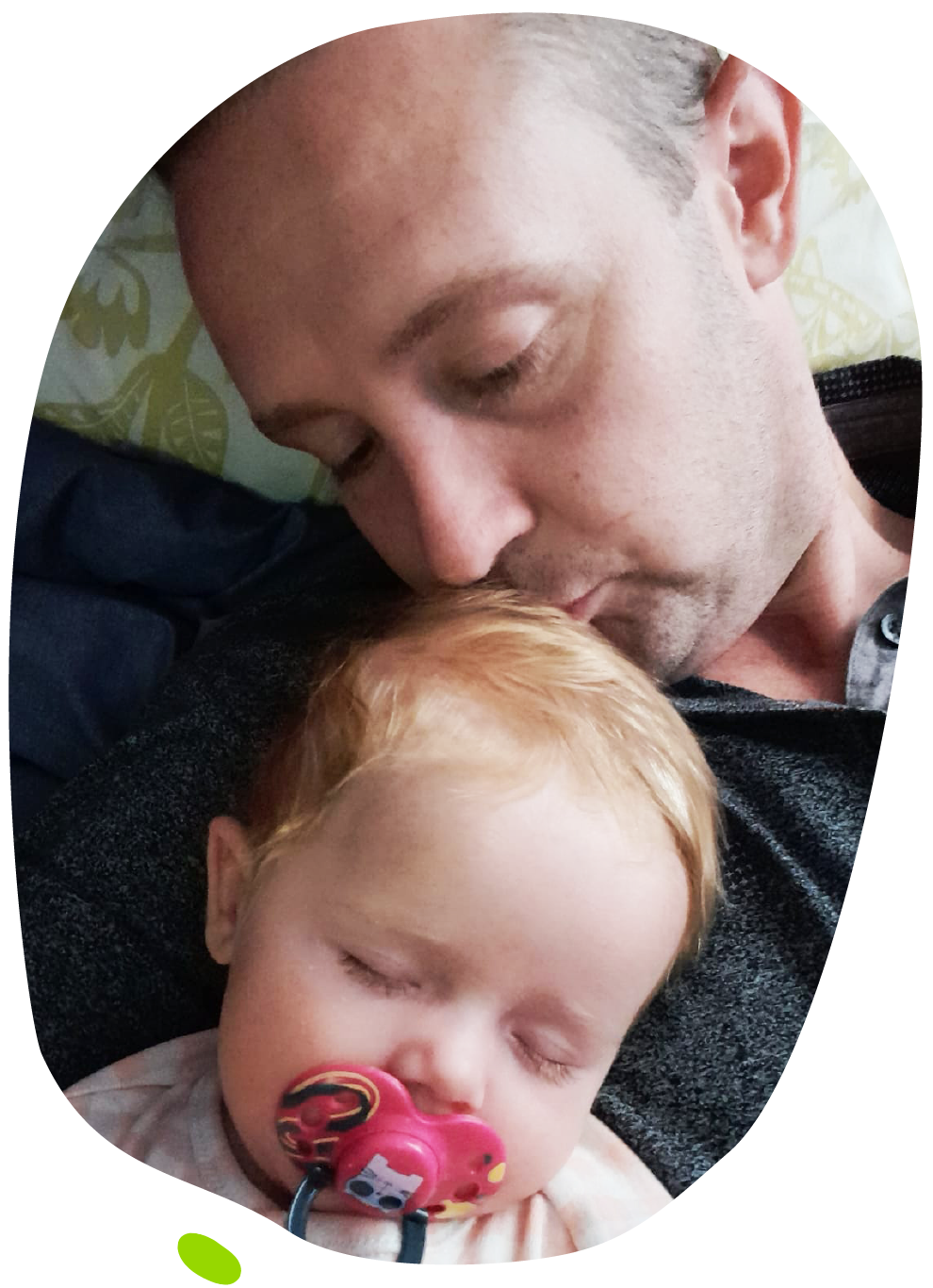
Katie’s our 6th child so I knew things weren’t right within months of her arrival in May ’22. She wasn’t feeding or holding herself well – but I felt constantly fobbed off whenever I raised concerns. After an awful period of severe constipation, Katie was finally referred to a specialist who really listened and took action.
Blood tests showed high lactate levels and an MRI, damage to Katie’s brain. When Katie began having strange movements and absent looks, I pushed for an EEG which found extensive abnormal activity.
As yet, epilepsy medication has been
unable to control Katie’s seizures.
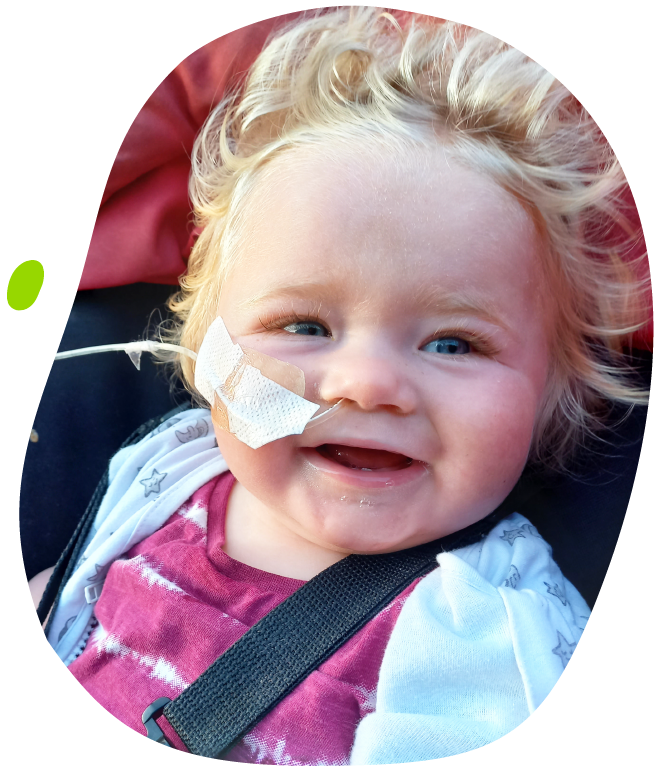
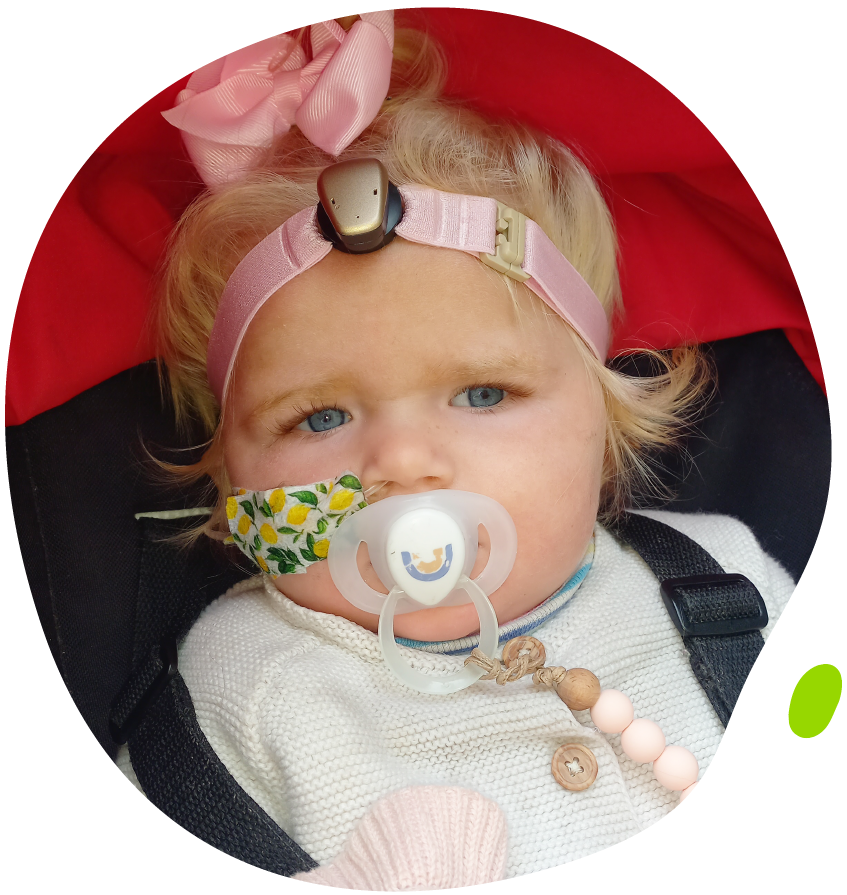
The possibility of mitochondrial disease was mentioned in March and Katie’s bloods along with mine and her dad, Leigh’s sent for specialist testing in Cambridge. Further hospital visits confirmed that Katie has visual and hearing impairment, low immunity and susceptibility to respiratory infection. Her reduced swallowing ability means she needs peg feeding.
July brought the devastating news that Katie has a form of mito known as Leigh Syndrome, involving the PDHA1 gene – a fault that’s occurred spontaneously and not inherited. Thankfully this means that our other children are not affected, but it’s still of course horrendous news.
Katie’s prognosis isn’t good
…and our hearts are broken.
As of 2024, Katie has progressed really well developmentally on the keto diet, but unfortunately the mito symptoms have worsened. She is in and out of hospital and her reduced swallowing ability now means she needs feeding directly into her tummy through a jejunostomy tube.
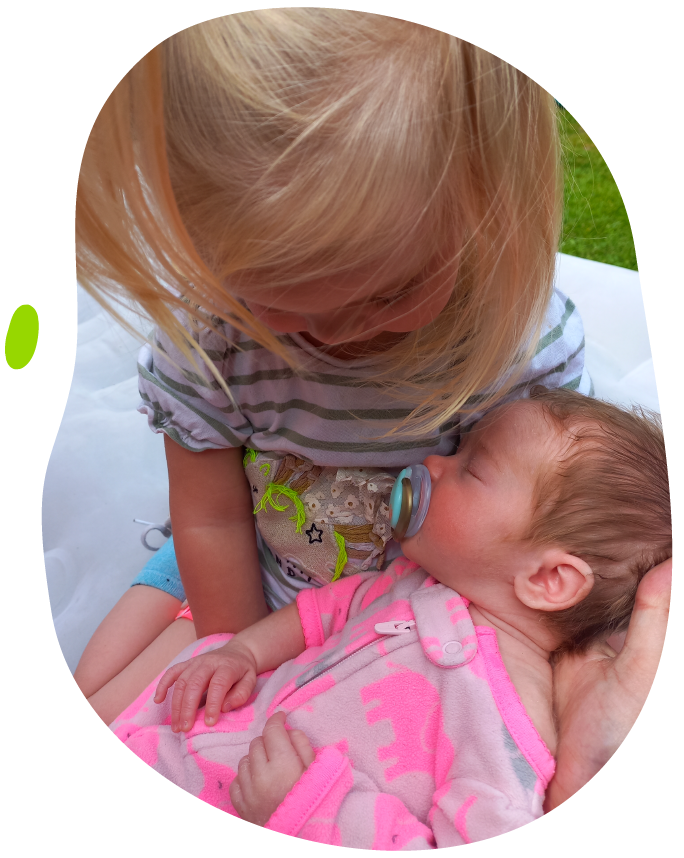
Through all this, Katie just keeps loving life. She’s the happiest little girl with a smile for everyone. Even when she’s distressed, you can see her trying to smile through her cries. She’s adored by her siblings Marcus, 16; Nathan, 15; Phoebe, 4 and twins Thomas & Emily 3. She also has a heartwarming, special bond with Milanna, who’s the same age with a similar diagnosis whose family we met through social media. Her mum, Reanna’s been my rock.
Katie’s Mito Mission will
help raise vital awareness
…about the illness and the importance of research. Research gives us hope that a treatment may be found which could help Katie.
Our journey to receiving a diagnosis
was difficult and frustrating
It would be good to think that we can play a part in preventing other people having to go through the same in order to get answers.
Any support will be
incredibly appreciated.
Get involved and
support Katie's cause.
Any funds raised by Katie’s mission will go to My Mito Mission’s central funds to be granted towards research and support projects to benefit everyone affected by mito.
Spreading the word, following, sharing, as well as donating and raising funds are all really helpful and valued. From running a race to holding a bake sale, hosting a collecting can to giving out Katie’s Mito Mission leaflets – there are so many ways in which you can get involved.
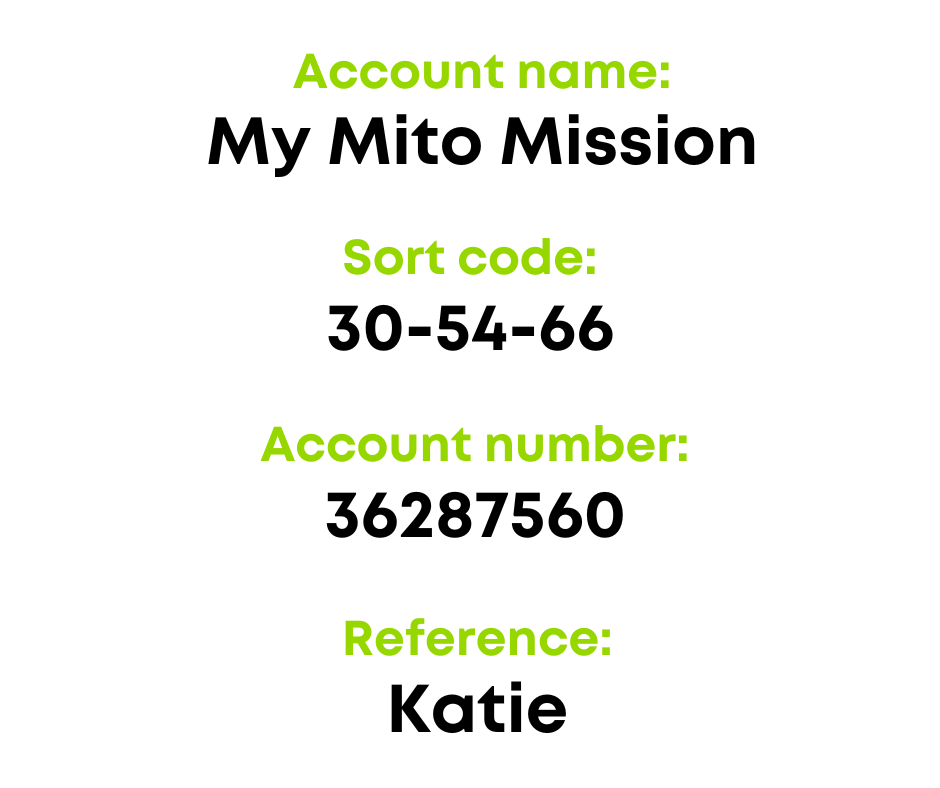
If you’d simply like to donate to Katie’s mission, choose a way that suits you below.
Be a Part of Project 1000 Strong
Regular donations are the most powerful way to support our vital work, allowing us as a small, high-energy charity to plan and build from a strong foundation.
Strengthening the future of mito awareness, support and research.
We need a 1000-strong team of amazing people to donate any amount from just £2 a month. 1000 is a lot, but – one by one – we know that we can reach it. Find out more here.
Support Katie by Joining Project 1000 Strong!
For any other amount or frequency (eg weekly, quarterly, annual), simply contact us
Fundraise for Katie’s Mito Mission
We’d love your support with our fundraising… and we can provide supporting materials. Just ask!
Set up a fundraising page (Use the orange ‘Fundraise For Us’ button)
Set up a Facebook fundraiser by clicking above and searching for 'My Mito Mission'
Download a sponsor form to print off by clicking the image above
Support materials such as buckets, cans, leaflets and more
Ask anyone you know to have a Change Box, Small change - Big difference!
Fundraise and shop!
Find our ebay shop easily by clicking 'Save seller'
Visit our second hand clothing shop and follow our account
Support us by purchasing something from our Amazon Wishlist
Support us for free at 100s of stores - click the ‘Find your charity’ button
Click the heart under our charity number to set us as your favourite charity
Other ways you can support us
Nominate Katie's mission for support at your work or club
Collect saleable, used items that we can sell in our ebay shop
Check out the merch in our shop to raise awareness and funds
Let us talk to your organisation about our cause
Come to our events and help us raise vital mito awareness and funds
We use cookies on our website to give you the most relevant experience by remembering your preferences and repeat visits. By clicking “Accept”, you consent to the use of ALL the cookies.
This website uses cookies to improve your experience while you navigate through the website. Out of these, the cookies that are categorized as necessary are stored on your browser as they are essential for the working of basic functionalities of the website. We also use third-party cookies that help us analyze and understand how you use this website. These cookies will be stored in your browser only with your consent. You also have the option to opt-out of these cookies. But opting out of some of these cookies may affect your browsing experience.
Necessary cookies are absolutely essential for the website to function properly. This category only includes cookies that ensures basic functionalities and security features of the website. These cookies do not store any personal information.
Any cookies that may not be particularly necessary for the website to function and is used specifically to collect user personal data via analytics, ads, other embedded contents are termed as non-necessary cookies. It is mandatory to procure user consent prior to running these cookies on your website.