When they’re faulty, the body begins to break down because it cannot generate enough energy.
The major organs like the brain and heart require most energy. This means that they are often most impacted when the mitochondria don’t function properly.
The muscles, liver, kidney, vision and hearing are also often affected by damage to the mitochondria, as we can see in individuals with mitochondrial disease.
However, it’s not only people with mitochondrial disease who are impacted by mitochondrial dysfunction…

We’re thrilled to be able to work with some of the world’s leading scientists and doctors in mitochondrial research. Continue reading to find out what they have to say about mitochondrial research…
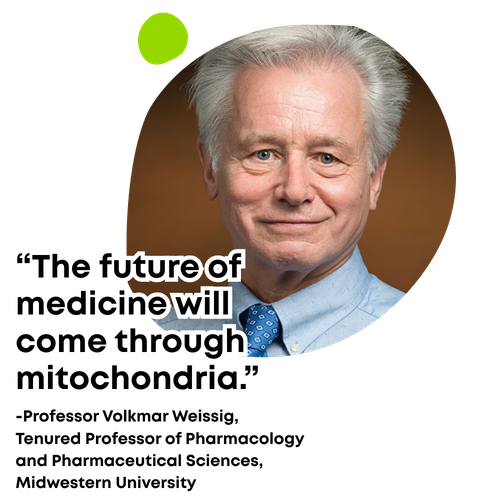
In the last 50 years or so, medical researchers have found that the mitochondria are key in our understanding of many different illnesses and diseases.
One example of this is in cancer. Mutations in mtDNA are frequently observed in tumours, affecting oxidative phosphorylation and contributing to tumour progression. Mitochondria are also the primary source of intracellular Reactive Oxygen Species (ROS). Moderate ROS levels can promote proliferation and genetic mutations, contributing to normal cells transforming into cancerous cells.

It’s thanks to the incredible scientists working on mitochondrial research that this strategy might have the potential to be implemented in cancer treatments very soon.
Alzheimer’s Disease
ALS/Motor Neurone Disease
Huntingdon’s Disease
Multiple Sclerosis
Parkinson’s Disease
Heart Diseases
Lorem ipsum dolor sit amet, consectetur adipisicing elit. Optio, neque qui velit. Magni dolorum quidem ipsam eligendi, totam, facilis laudantium cum accusamus ullam voluptatibus commodi numquam, error, est. Ea, consequatur.
Lorem ipsum dolor sit amet, consectetur adipisicing elit. Optio, neque qui velit. Magni dolorum quidem ipsam eligendi, totam, facilis laudantium cum accusamus ullam voluptatibus commodi numquam, error, est. Ea, consequatur.
Lorem ipsum dolor sit amet, consectetur adipisicing elit. Optio, neque qui velit. Magni dolorum quidem ipsam eligendi, totam, facilis laudantium cum accusamus ullam voluptatibus commodi numquam, error, est. Ea, consequatur.
Lorem ipsum dolor sit amet, consectetur adipisicing elit. Optio, neque qui velit. Magni dolorum quidem ipsam eligendi, totam, facilis laudantium cum accusamus ullam voluptatibus commodi numquam, error, est. Ea, consequatur.
Lorem ipsum dolor sit amet, consectetur adipisicing elit. Optio, neque qui velit. Magni dolorum quidem ipsam eligendi, totam, facilis laudantium cum accusamus ullam voluptatibus commodi numquam, error, est. Ea, consequatur.
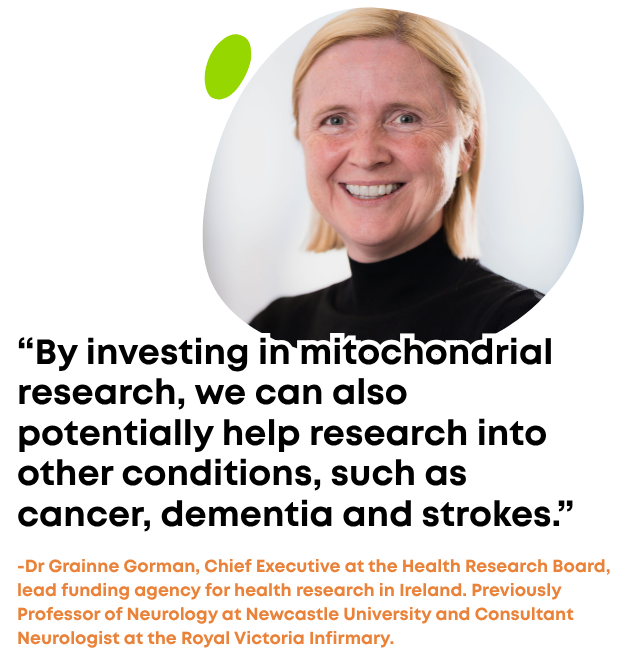
There are countless conditions that could be better treated, or even cured, through mitochondrial research. We don’t even yet know the full potential it could have, as it’s such a groundbreaking, relatively new field of study, which is still being treated as ‘niche’ when it may well be one of the most significant, exciting areas in medicine today.

Decline in Function:
Mitochondrial function, particularly oxidative phosphorylation ***(the process cells use to convert nutrients into usable energy)***, tends to decrease with age.

Increased Oxidative Stress:
Mitochondria are a major source of reactive oxygen species (ROS), which are damage-causing molecules. With age, ROS production can increase, leading to further mitochondrial damage.

Mitochondrial DNA Damage:
Mitochondrial DNA (mtDNA) mutations accumulate with age, potentially impacting mitochondrial function and contributing to age-related diseases.

Morphological Changes:
Mitochondria can also undergo structural changes with age, becoming more rounded and enlarged, and showing reduced density in the cristae, the inner folds of the mitochondria.

Reduced Mitophagy:
Mitophagy, the process of removing damaged mitochondria, also declines with age, further contributing to the accumulation of dysfunctional mitochondria.
Though it may be a while until we can effectively slow or even reverse these issues, mitochondrial research will be key. The more we put into mito research, the more it will give us to help us live better, healthier lives.
The more efficiently your mitochondria function, the more effectively you metabolise, leading to a higher overall metabolic rate. This means your body burns more calories, and can improve the absorption of micronutrients, blood circulation and energy levels.
While they play a role in normal bodily functions, when the body’s antioxidant defenses are overwhelmed by the production of free radicals, it can cause oxidative stress, potentially damaging cells and contributing to various diseases.
***Free radicals act as a double-edged sword in the body. In small, controlled amounts, they act as crucial biological signals and defenders against infections. However, when they become too abundant, they trigger oxidative stress, stealing electrons from healthy cells and causing permanent damage to your DNA and proteins.
Free radicals themselves are neither entirely “good” nor “bad”; rather, their impact depends entirely on their concentration and where they are in the body.***
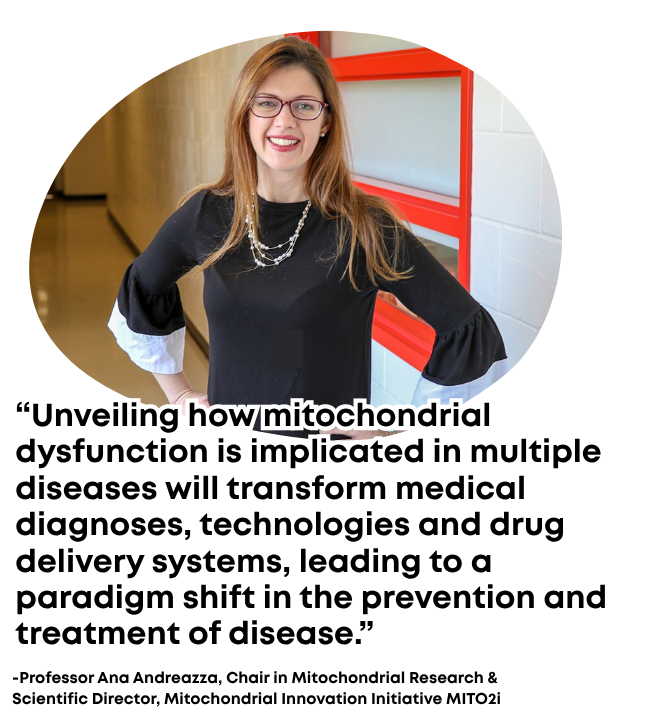
As well as powering support, awareness and research for mitochondrial disease, we believe that it is our responsibility to raise awareness of how mito research could help everyone.
That’s because it’s how we will best increase support for our cause, fast-track treatments and a cure for mito – and because we feel that the world deserves to know!
Furthermore, mitochondrial disease patients, with their unique genetics, can be an incredibly insightful resource for medical researchers who want to understand mitochondrial function more.
Many patients with mitochondrial disease have well-characterised mutations that cause problems in energy production. Studying their cells helps researchers:
Because many mitochondrial diseases are caused by known mutations (in mitochondrial DNA or nuclear DNA that affects mitochondria), patients provide a clear link between genotype and phenotype. This helps: Validate genetic findings in other diseases with overlapping symptoms Understand how different cells compensate for defective mitochondria Discover potential genetic modifiers that could explain resilience or severity
© 2026 My Mito Mission. Design by Carl Holderness. Built by lnrgraphics
contact@mymitomission.uk | 0300 102 1112
My Mito Mission is a Charity Registered in England & Wales No. 1212268 at c/o Project Colt, Bridgefield Mills, Elland HX5 0SQ