
It’s a genetic condition that affects the body’s ability to produce energy.
Almost every cell in our body contains tiny structures called mitochondria; often hundreds or even thousands of them in a single cell. Their job is to turn the food we eat and the oxygen we breathe into the energy our bodies need to work properly.
In mitochondrial disease, the mitochondria don’t work as well as they should, which means cells may not be able to produce enough energy for the body to function properly.
 The short answer…
It’s a genetic condition that affects the body’s ability to produce energy.
A little more detail…
Almost every cell in our body contains tiny structures called mitochondria; often hundreds or even thousands of them are in a single cell. Their job is to turn the food we eat and the oxygen we breathe into the energy our bodies need to work properly.
In mitochondrial disease, the  mitochondria don’t work as well as they should, which means cells may not be able to produce enough energy for the body to function properly.
 The short answer…
Mitochondrial disease is caused by a change — or fault — in a gene that helps control how the mitochondria work. This may be inherited from one or both parents, or be a new genetic change present from birth.
A little more detail…
Our mitochondria are unusual because the instructions they need to work come from two different sets of DNA — our nuclear DNA (nDNA)  and our mitochondrial DNA (mtDNA). These two sets of DNA must work together for our mitochondria to function properly.
Most of our genes are found in our nuclear DNA, the main set of DNA that we inherit from both our parents. We have around 20,000 genes in our nDNA in total, and over 1,000 of these are involved in how our mitochondria work. A fault in some of these genes can cause mitochondrial disease, with over 350 identified to date.
Mitochondrial DNA, or  mtDNA, is the mitochondria’s own small set of DNA. It contains just 37 genes, and faults in any of these can also cause mitochondrial disease. Unlike nuclear DNA, mitochondrial DNA is inherited only from the mother.
 The short answer…
More common than most people think!
Mitochondrial disease is estimated to affect around 1 in 5,000 adults and children, making it one of the most common genetic conditions.
A little more detail…
 Individual types of mitochondrial disease can be extremely rare. But because so many different genetic faults can cause mito, together they affect far more people than many realise.
The 1 in 5,000 figure estimates how many people are living with mitochondrial disease at any one time. Looking across an entire lifetime, however, research suggests that as many as 1 in 1,500 people will experience the onset of the condition.
Mitochondrial disease is also known to be underdiagnosed, so the true number of people affected could be higher still.
 Figures like these can be difficult to make sense of without some context. Based on estimates of how many people are living with each condition, it may surprise you to know that mitochondrial disease is roughly as common in the UK as cystic fibrosis, and considerably more common than motor neurone disease — even though far fewer people have heard of it.
The short answer…
 There are several reasons — and they’re some of the reasons My Mito Mission exists!
For starters, most people have never even heard of mitochondria, let alone mitochondrial disease!
Then there’s the fact that mitochondrial disease is extremely complex, can be difficult to recognise, and is still relatively new to medical understanding.
A little more detail…
Although mitochondria have been known about for much longer, thefirst genetic causes of mitochondrial disease were only discovered in the late 1980s, and our understanding is still developing rapidly.
And there’s a more  fundamental problem: Without a basic understanding of what mitochondria are and what they do, it’sdifficult for people to appreciate what happens when they don’t work properly — or just how serious the consequences can be.
Mitochondrial disease is also not one single condition. It’s a large and complex group of genetic conditions that can affect people very differently. Individual types can be exceptionally rare, have different names and cause very different symptoms — so they aren’t always recognised as being part of the same disease.
Mito can also be difficult to diagnose, and many people live with symptoms for years before finding the cause.
We’re working to change  that by helping more people understand what mito is, how it can affect people and why it matters.


The short answer…
It’s a genetic condition that affects the body’s ability to produce energy.
A little more detail…
Almost every cell in our body contains tiny structures called mitochondria — often hundreds or even thousands of them in a single cell. Their job is to turn the food we eat and the oxygen we breathe into the energy our bodies need to work properly.
In mitochondrial disease, the mitochondria don’t work as well as they should, which means cells may not be able to produce enough energy for the body to function properly.
The short answer…
No. Mitochondrial disease can affect people of any age; from newborn babies to older adults.
A little more detail…
Although mitochondrial disease is sometimes associated with seriously ill children, it is by no means just a childhood condition. Many people are first diagnosed as adults, sometimes quite late in life.
The underlying genetic fault is present from birth, even if symptoms don’t appear until much later. Some people develop symptoms in childhood, while others may live for decades before there are any noticeable signs of the disease.
The short answer…
Because having a genetic fault doesn’t necessarily mean it will cause problems straight away.
Someone’s mitochondria may still be able to produce enough energy for their body to work properly for many years, even though the genetic fault has been present since birth.
A little more detail…
Symptoms can begin when the mitochondria can no longer keep up  with the body’s energy needs. This can happen gradually over time, or sometimes following an added strain on the body, such as an illness or trauma.
This is why someone can appear completely healthy for years before mitochondrial disease begins to cause noticeable symptoms.
You may hear terms such as ‘childhood-onset’ or ‘adult-onset’ mitochondrial disease, referring broadly to when the disease first begins to show itself. Sometimes, though, earlier and more subtle signs are only recognised with hindsight.
 The short answer…
Mitochondrial disease can cause a huge range of symptoms, and people can be affected very differently.
Fatigue, low energy and muscle weakness are common, but because almost every part of the body relies on mitochondria for energy, mito can affect many different organs and body systems.
A little more detail…
Parts of the body that need particularly large amounts of energy, such as the brain, muscles, heart and eyes, can be especially affected.
Symptoms can include  muscle weakness and pain, poor stamina, problems with balance and coordination, seizures, hearing and/or sightloss, digestive problems, difficulties with learning or development, and problems affecting the brain and nervous system.
Different types of mito can cause different combinations of symptoms, and both the symptoms themselves and their severity can vary enormously from one person to another. Even people in the same family with the same genetic fault can beaffected very differently.
 Mito can also be the underlying cause of recognised medical conditions, such as diabetes, epilepsy and certain heart problems. Someone may be correctly diagnosed with one of these conditions without anyone realising that mitochondrial disease is responsible.
It’s important to understand, though, that having diabetes, epilepsy or aheart condition doesn’t in itself mean someone has mitochondrial disease. Most people with these conditions don’t. Equally, someone with mito may develop other health problems that are completely unrelated to it.
All of this adds to the complexity of mitochondrial disease, both in recognising it and understanding how it affects each person.
The short answer…
 Mitochondrial disease can be very serious, but its impact varies enormously from person to person.
For some, it can be severely life-limiting; for others, it may not shorten life at all, with a whole spectrum in between.
A little more detail…
Some forms of mitochondrial disease that show symptoms very early in life can be particularly severe. However, age of onset alone cannot predict how someone will be affected. This also depends on the particular genetic fault, how it affects mitochondrial function and which parts of the body are affected.
Mitochondrial disease can also be progressive, meaning symptoms mayworsen or new problems develop over time. Illness or other stresses on the body can sometimes cause symptoms to worsen, and recovery may take longer. Some people may not even fully recover from a short term illness.
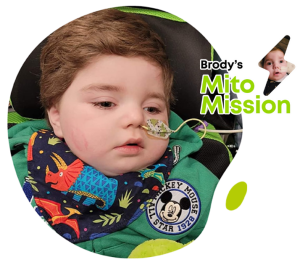 Some people live relatively independent lives with manageable symptoms, while others have complex health needs and may become severely disabled or seriously ill.
The short answer…
It’s a genetic condition that affects the body’s ability to produce energy.
A little more detail…
Almost every cell in our body contains tiny structures called mitochondria — often hundreds or even thousands of them in a single cell. Their job is to turn the food we eat and the oxygen we breathe into the energy our bodies need to work properly.
In mitochondrial disease, the mitochondria don’t work as well as they should, which means cells may not be able to produce enough energy for the body to function properly.
The short answer…
Mitochondrial disease can be difficult to diagnose, and there isn’t one single test that works for everyone.
Diagnosis usually involves a combination of tests, including genetic testing, alongside an assessment of someone’s symptoms and medical history. For many people, a genetic test can confirm the diagnosis, but this isn’t always possible.
A little more detail…
Genetic testing can identify a fault in a gene known to cause mitochondrial diseaseand, for many people, provide a specific geneticdiagnosis.
Where a genetic cause cannot be identified,  biochemical testing can sometimes show that the mitochondria’s energy-producing system is not working properly. This may involve testing samples such as urine or muscle.
Other tests, including blood tests, MRI scans and sometimes a muscle biopsy, can also provide important evidence.
However, our understanding of the genetics behind mitochondrial disease is still developing. For some people, all the evidence points towards mito but current testing cannot confirm the exact cause of their symptoms. They may therefore remain  suspected of having mitochondrial disease without receiving a definitive genetic diagnosis.
The short answer…
 What happens next will be different for everyone, depending on the type of mitochondrial disease and how they are affected.
There may be further tests, ongoing medical care and support to help manage symptoms and maintain the best possible health and quality of life.
A little more detail…
Further tests may be needed to understand which parts of the body are affected, followed by regular monitoring and care from different specialists where needed.
Treatment will usually focus on managing individual symptoms,  maintaining health and helping to prevent complications.
In the UK, there are three NHS specialist centres for mitochondrial disease, based in Newcastle, Oxford and London. They provide specialist expertise in diagnosis and care, working in partnership with GPs and local hospital specialists to help coordinate a person’s care.
GPs and local hospital specialists remain the first points of contact for healthcare needs, even for people attending one of these specialist mito centres.
Not everyone with  mitochondrial disease will be referred to a specialist centre, as appropriate expertise and care may already be available locally. However, anyone who would like specialist input can discuss the possibility of a referral with their healthcare team.
Families may also be offered genetic counselling to help them understand how the condition has arisen, whether other family members could be affected and what it might mean for any future children in the family.
 Alongside the medical care, you don’t have to navigate mito alone. We offer information, support and opportunities to connect with others who understand.
The short answer…
 Mostly because mitochondrial disease isn’t one single condition. It’s an umbrella term for many different genetic conditions that all affect how the mitochondria work and produce energy.
Think of it a little like how cancer is named — one familiar umbrella name, with many different types sitting beneath it.
A little more detail…
The different names can describe the symptoms someone has, the gene or genetic change causing their disease, or the particular type of mito they have.
You may also hear mitochondrial disorder, which is often used to mean much the same thing.
Mitochondrial myopathy describes mitochondrial disease where the muscles are particularly affected — myopathy simply means muscle disease.
Some types of mito are known by syndrome names, such as MELAS syndrome or Leigh syndrome. These names describe a particular pattern of symptoms and can include people with a number of different underlying genetic faults.
Other types are more specifically identified by the gene or genetic change causing them — for example, POLG-related disease or m.3243A>G-related mitochondrial disease.
 And it isn’t always a neat fit: the same genetic fault can sometimes cause different symptoms or syndromes in different people, while the same syndrome can have different genetic causes.
Whatever name is used, they all sit within the wider group we call mitochondrial disease and often share experiences.


The short answer…
It’s a genetic condition that affects the body’s ability to produce energy.
A little more detail…
Almost every cell in our body contains tiny structures called mitochondria — often hundreds or even thousands of them in a single cell. Their job is to turn the food we eat and the oxygen we breathe into the energy our bodies need to work properly.
In mitochondrial disease, the mitochondria don’t work as well as they should, which means cells may not be able to produce enough energy for the body to function properly.
 The short answer…
You may hear some people with mitochondrial disease say they have been given a particular percentage or ‘level’.
This usually refers to the proportion of their mitochondrial DNA (mtDNA) that carries a particular genetic change. However, a higher percentage doesn’t necessarily mean someone will be more severely affected.
A little more detail…
We have many copies of mitochondrial DNA, and a genetic change can be present in some copies but not others. The scientific term for this is ‘heteroplasmy’. The percentage tells us how many of the copies tested carry that change.
You may also hear heteroplasmy levels described as low, moderate or high. As a broad guide, levels may be grouped as:
Low: up to around 30%
Moderate: around 31–69%
High: around 70% and above
When almost all — or all — of the mtDNA copies carry the same genetic change, you may hear the term homoplasmy.
Not all types of mitochondrial disease work in this way, so not everyone with mito will be given a percentage.
Importantly, though, the percentage is only one part of the picture. A higher percentage does not necessarily mean someone will be more severely affected than someone with a lower one.
One reason is that the level can be different in different parts of the body. A percentage measured in blood, urine or muscle tells us what was found in that particular sample — it doesn’t necessarily tell us the level in the brain, heart or other organs.
It also matters which genetic change is involved and which cells and organs are affected. Different parts of the body need different amounts of energy and can cope differently when mitochondria aren’t working properly.
So, while heteroplasmy levels can provide useful information, they cannot on their own predict how someone will be affected. Two people with the same genetic change — even with similar percentages 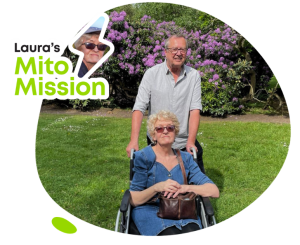 — can have very different symptoms and levels of health.
The short answer…
 Yes. Mitochondrial disease can be passed from parents to their children. However, how it is passed on, and the chances of this happening, depend on the particular genetic fault involved.
A little more detail…
Our mitochondria rely on instructions from two different sets of DNA — mitochondrial DNA and nuclear DNA. Genetic faults in either can cause mitochondrial disease, but they are inherited in different ways.
Mitochondrial DNA (mtDNA)
Mitochondrial DNA is the mitochondria’s ownsmall set of DNA, which we inherit from our mother.
 Therefore, both sons and daughters can inherit faults in mtDNA, but only women can pass them on to their own children.
In many forms of mitochondrial disease involving mitochondrial DNA, a person has a mixture of healthy and faulty copies. When a mother passes mitochondrial DNA on to her children, the proportions they inherit can vary considerably.
Imagine a jug filled with blue and red marbles — the blue ones representing healthy mitochondrial DNA and the red ones representing faulty mitochondrial DNA. Whatever the original balance of colours in the jug, if you pour out small batches, each won’t necessarily contain the same proportions. One might have hardly any red  marbles, another might have lots, and others somewhere in between.
Something similar happens as a woman’s eggs develop. The proportions of healthy and faulty mitochondrial DNA can vary considerably from one egg to another.
Generally, the higher the proportion of faulty mitochondrial DNA, the more likely it is that symptoms will develop — although this also depends on which parts of the body are affected.
 This helps explain why one child may be affected by mitochondrial disease while another isn’t, or why siblings may be affected very differently.
It also helps explain how a mother with no symptoms can have a child who is seriously affected — or how a mother who is seriously affected can have a child with few or no symptoms.
Nuclear DNA (nDNA)
Nuclear DNA is the mainset of DNA found in the ‘nucleus’ of almost all our cells, which we inherit from both parents. It contains most of our genes, including many that control how our mitochondria work.
Depending on the particular gene involved, mitochondrial disease may be inherited from one parent or both, with different chances of passing it on to children.
Sometimes, though, mitochondrial disease isn’t inherited at all. A new genetic change can occur for the first time in an individual, with no previous family history of the disease.
Because mitochondrial disease can be inherited in different ways, there isn’t one simple answer to the chances of passing it on. Genetic counselling can help families understand how their particular type of mito may be inherited, and what it could mean for them and other family members. 
 The short answer…
There is currently no cure for mitochondrial disease, and for most people there is not yet a treatment that tackles the underlying cause.
However, treatments can help manage symptoms and improve quality of life — and research is bringing us closer to treatments that target the disease itself.
A little more detail…
Treatment usually focuses on managing symptoms, preventing complications and helping people maintain the best possible health and quality of life. This can include medicines, physiotherapy, occupational therapy, nutritional support and other specialist care.
However, this is an area  that is changing rapidly. The first treatments targeting the underlying mitochondrial problem in specific types of mito are now emerging, and many more potential treatments are being researched and tested in clinical trials.
These treatments won’t necessarily work across all mitochondrial diseases — different genetic causes are likely to need different approaches — but they represent an important shift from treating only the symptoms towards treating mitochondrial disease itself.
The short answer…
There is currently no cure for mitochondrial disease, and for most people there is not yet a treatment that tackles the underlying cause.
However, treatments can help manage symptoms and improve quality of life — and research is bringing us closer to treatments that target the disease itself.
A little more detail…
Treatment usually focuses on managing symptoms, preventing complications and helping people maintain the best possible health and quality of life. This can include medicines, physiotherapy, occupational therapy, nutritional support and other specialist care.
However, this is an area that is changing rapidly. The first treatments targeting the underlying mitochondrial problem in specific types of mito are now emerging, and many more potential treatments are being researched and tested in clinical trials.
These treatments won’t necessarily work across all mitochondrial diseases — different genetic causes are likely to need different approaches — but they represent an important shift from treating only the symptoms towards treating mitochondrial disease itself.
The short answer…
 Because research offers hope for people affected by mitochondrial disease – hope for earlier diagnosis, better treatments and, ultimately, cures.
It helps us understand the disease, improve diagnosis and develop treatments that tackle the underlying problems.
A little more detail…
Despite everything  we’ve learned, there is still so much we don’t understand about mitochondrial disease. There are many different genetic causes, people with the same genetic fault can be affected very differently, diagnosis can still be difficult, and for most people there is currently no treatment that tackles the underlying disease.
Research is how we change that.
It helps us understand what goes wrong in the mitochondria, find better and faster ways to diagnose and monitor disease, and identify new ways to prevent or treat the problems it causes.
 Most importantly, research is opening the door to treatments that target the disease itself, rather than only managing its symptoms; and ultimately, we hope, to cures.
For people affected by mitochondrial disease and their families, research represents something equally important: hope. Hope that what isn’t possible today will become possible in the future.
And the potential reaches much further than mitochondrial disease. Problems with mitochondria are also involved in many other health conditions, including some of the world’s most common diseases. A breakthrough in  mitochondrial disease research could therefore open the door to new treatments for millions of people worldwide.
The short answer…
Yes! When you think about how fundamental energy is to almost everything our bodies do, it makes sense that problems with mitochondria are involved in many different health conditions.
Research is increasingly revealing just how important that involvement is in conditions such as cancer, dementia, diabetes and heart disease – and many more.
It’s important to understand, though, that having problems with mitochondria as part of another health condition isn’t the same as having mitochondrial disease itself.
 A little more detail…
In mitochondrial disease, the problem with the mitochondria is ‘primary’ — it is caused by the genetic fault and is at the root of the condition.
In many other illnesses, problems with the mitochondria are ‘secondary’ — they happen as a result of other things going wrong in the body. But that doesn’t mean they aren’t important. Changes in how the mitochondria work can still play an important — and sometimes fundamental — role inthe illness.
This includes conditions affecting millions of people, such as cancer,  dementia, diabetes, epilepsy, heart disease, multiple sclerosis, motor neurone disease and stroke.
And it’s not just about disease. Mitochondria also play an important role in our general health and wellbeing, and changes in how they work are closely linked to the ageing process.
 The more we understand about mitochondria — in mitochondrial disease and across other areas of medicine — the more opportunities there may be to find new ways to protect, repair or improve how they work. We believe this growing understanding could help accelerate progress towards new treatments and cures — for mitochondrial disease and potentially many other conditions too.