Welcoming Arthur’s Mito Mission!

We are delighted to welcome Arthur and his family to our growing team of missions.

Arthur’s mission is based in Northampton and the family want to share Arthur’s story which they hope it will give an insight into the challenging journey a family can experience before and after a diagnosis of mitochondrial disease. Through their mission the family would like to find support and speak to people who truly understand what they are going through.

You can read the full inspiring story here.

Welcoming Arthur's Mito Mission!

Arthur news image

We are delighted to welcome Arthur and his family to our growing team of missions.

Arthur’s mission is based in Northampton and the family want to share Arthur’s story which they hope will give an insight into the challenging journey a family can experience before and after a diagnosis of mitochondrial disease. Through their mission the family would like to find support and speak to people who truly understand what they are going through.

You can read the full inspiring story here.

If you are impacted by mitochondrial disease you can get more information about starting your very own Mito Mission here.

Postdoctoral Researcher Funding – Interview with Elena Britti

My Mito Mission is supporting an exciting research project at UCL that aims to deepen our understanding of mitochondrial disease and explore new possibilities for treatment.

We believe that looking beyond mitochondrial disease itself, and exploring connections with other conditions, could help accelerate discoveries and bring us closer to effective treatments for people affected by mitochondrial disease.

Here, post-doctorate researcher Elena Britti explains how the project is exploring these connections and what she hopes it will achieve.

What attracted you particularly to this opportunity?
From my undergraduate studies onward, my research career has been driven by a deep enthusiasm for mitochondrial research. In fact, I consider myself a ‘Mitochondriac’. Recently, I spent some time working outside mitochondrial research, and that experience made me realise how much I missed it. This opportunity allowed me to return to the research area I am most passionate about, while contributing to a project with potential to improve patients’ lives.

What do you look forward to most about working with Antonella, and the project in general?
Working with Antonella Spinazzola means working alongside someone who is incredibly hardworking, creative, and genuinely passionate about mitochondrial research. I’m excited to learn from her and to make discoveries together. What particularly excites me about this project is that we are looking at links between conditions that are usually studied separately, such as rare mitochondrial diseases and Parkinson’s disease.

Can you explain this research project in simple terms, for somebody who might not know much about science?
Some individuals with rare mitochondrial diseases can develop symptoms that resemble Parkinson’s disease, a neurodegenerative disorder that typically occurs later in life. We want to understand what connects these two conditions. By taking skin cells donated by patients with these rare diseases and reprogramming them into the type of brain cells affected in Parkinson’s disease, we can investigate what is happening inside those cells. We will then compare them with brain cells made from people with Parkinson’s disease. By looking for common changes between the two, we hope to uncover what links these conditions and identify new ways of treating them in the future.

Why would you say this research is important right now?
We have known for some time that there is a connection between mitochondrial function and Parkinson’s disease, but there is still a lot we don’t know about that connection. Rare diseases can inform common forms of neurodegeneration, so we have an opportunity to make discoveries that could benefit both groups of patients. My Mito Mission recognises that mitochondria play a role in many different diseases and provides the support needed for pilot studies like this one.

How do you measure progress in a project where results may take a long time?
For me, progress isn’t measured only by the final result. Every experiment, every new piece of data, and every question we answer brings us one step closer to understanding the mechanisms of diseases. Research takes time, but consistent effort towards a final goal, collaborations with other scientists, and learning from others are what lead to meaningful discoveries. As an infinite puzzle to solve, you enjoy the process. You may never see the infinite puzzle completed; however, it’s incredibly rewarding to know you’ve helped reveal a much bigger picture.

How does your work fit into the bigger picture of research happening globally?
Mitochondria are involved in far more diseases than people often realise. My work aims to connect the dots between genetic forms of mitochondrial diseases and Parkinson’s disease. By connecting diseases that are usually studied separately, we have the opportunity to make discoveries that could have a much broader impact. This knowledge could eventually allow us to repurpose treatments developed for rare mitochondrial diseases to benefit Parkinson’s patients and vice versa, as well as discover new therapeutic targets for both groups of patients along the way.

Postdoctoral Researcher Funding - Interview with Elena Britti

Elena Biritti My Mito Mission is supporting an exciting research project at UCL that aims to deepen our understanding of mitochondrial disease and explore new possibilities for treatment. We believe that looking beyond mitochondrial disease itself, and exploring connections with other conditions, could help accelerate discoveries and bring us closer to effective treatments for people affected by mitochondrial disease. Here, post-doctorate researcher Elena Britti explains how the project is exploring these connections and what she hopes it will achieve.

What attracted you particularly to this opportunity?
From my undergraduate studies onward, my research career has been driven by a deep enthusiasm for mitochondrial research. In fact, I consider myself a ‘Mitochondriac’. Recently, I spent some time working outside mitochondrial research, and that experience made me realise how much I missed it. This opportunity allowed me to return to the research area I am most passionate about, while contributing to a project with potential to improve patients’ lives.

What do you look forward to most about working with Antonella, and the project in general?
Working with Antonella Spinazzola means working alongside someone who is incredibly hardworking, creative, and genuinely passionate about mitochondrial research. I’m excited to learn from her and to make discoveries together. What particularly excites me about this project is that we are looking at links between conditions that are usually studied separately, such as rare mitochondrial diseases and Parkinson’s disease.

Can you explain this research project in simple terms, for somebody who might not know much about science?
Some individuals with rare mitochondrial diseases can develop symptoms that resemble Parkinson’s disease, a neurodegenerative disorder that typically occurs later in life. We want to understand what connects these two conditions. By taking skin cells donated by patients with these rare diseases and reprogramming them into the type of brain cells affected in Parkinson’s disease, we can investigate what is happening inside those cells. We will then compare them with brain cells made from people with Parkinson’s disease. By looking for common changes between the two, we hope to uncover what links these conditions and identify new ways of treating them in the future.

Why would you say this research is important right now?
We have known for some time that there is a connection between mitochondrial function and Parkinson’s disease, but there is still a lot we don’t know about that connection. Rare diseases can inform common forms of neurodegeneration, so we have an opportunity to make discoveries that could benefit both groups of patients. My Mito Mission recognises that mitochondria play a role in many different diseases and provides the support needed for pilot studies like this one.

How do you measure progress in a project where results may take a long time?
For me, progress isn’t measured only by the final result. Every experiment, every new piece of data, and every question we answer brings us one step closer to understanding the mechanisms of diseases. Research takes time, but consistent effort towards a final goal, collaborations with other scientists, and learning from others are what lead to meaningful discoveries. As an infinite puzzle to solve, you enjoy the process. You may never see the infinite puzzle completed; however, it’s incredibly rewarding to know you’ve helped reveal a much bigger picture.

How does your work fit into the bigger picture of research happening globally?
Mitochondria are involved in far more diseases than people often realise. My work aims to connect the dots between genetic forms of mitochondrial diseases and Parkinson’s disease. By connecting diseases that are usually studied separately, we have the opportunity to make discoveries that could have a much broader impact. This knowledge could eventually allow us to repurpose treatments developed for rare mitochondrial diseases to benefit Parkinson’s patients and vice versa, as well as discover new therapeutic targets for both groups of patients along the way.
Warmly Welcoming Rob’s Mito Mission!

We are delighted to be welcoming Rob’s Mito Mission based in Walkden, Greater Manchester.

My story shows how my family are impacted across generations, and how my symptoms have prevented me from working and even getting to vital medical appointments.

With his mission Rob would like to raise awareness, connect with others impacted and increase my confidence.

You can read Rob’s story here.

If you are impacted by mitochondrial disease you can get more information about starting your very own Mito Mission here.

Warmly Welcoming Rob's Mito Mission!

Rob news

We are delighted to be welcoming Rob’s Mito Mission based in Walkden, Greater Manchester.

My story shows how my family are impacted across generations, and how my symptoms have prevented me from working and even getting to vital medical appointments.

With his mission Rob would like to raise awareness, connect with others impacted and increase my confidence.

You can read Rob’s story here.

If you are impacted by mitochondrial disease you can get more information about starting your very own Mito Mission here.


Warmly Welcoming John’s Mito Mission!

We are delighted to be welcoming John’s Mito Mission based in Cumbernauld, North Lanarkshire.

John’ story tells of him and his family, who have been impacted across generations, sadly loosing his older sister to mitochondrial disease in 2014. His symptoms started when he was a child with sluggishness and fatigue.

John found My Mito Mission through Facebook and attended the recent Mito Community Day in Glasgow.

You can read his story here.

Warmly Welcoming Ezra's Mito Mission!

Ezra newsletter

We are honoured to welcome Ezra’s Mito Mission, based in Hull, Yorkshire who has joined our Mito Mission family today.

Ezra’s story shows that even with mitochondrial disease in the family, a diagnosis is not always straight forward and how mito can impact differently across generations.

You can read Ezra’s story on his webpage.

If you are impacted by mitochondrial disease you can get more information about starting your very own Mito Mission here.

Welcoming Paula’s Mito Mission!

We are happy to welcome Paula to our growing team.

Paula is based in Wincham, near Manchester and has launched her mission after fundraising for us at the Great Manchester 10k this year! Her journey with mitochondrial disease began in her early 40s when she started to lose her eyesight. With careful management of these symptoms and the help of her cousin Angela as her sighted guide, she completed the 10k and raised over £650 (and lots of awareness!).

You can read the full inspiring story here.

Welcoming Paula's Mito Mission!

Paula news

We are happy to welcome Paula to our growing team.

Paula is based in Wincham, near Manchester and has launched her mission after fundraising for us at the Great Manchester 10k this year!

Her journey with mitochondrial disease began in her early 40s when she started to lose her eyesight. With careful management of these symptoms and the help of her cousin Angela as her sighted guide, she completed the 10k and raised over £650 (and lots of awareness!).

You can read the full inspiring story here.


Welcome to Charlie’s Mito Mission

A family from Glasgow have started a mission for their gorgeous little boy Charlie, who is 4 and was diagnosed with mitochondrial disease this year.

His symptoms were very subtle at first, just a slight tremor noticed by his health visitor, and after 2 years, genetic testing confirmed he has the TARS2 genetic mutation.

You can read Charlie’s story here.

Welcome to Charlie's Mito Mission!

Charlie news

A family from Glasgow have started a mission for their gorgeous little boy Charlie, who is 4 and was diagnosed with mitochondrial disease this year.

His symptoms were very subtle at first, just a slight tremor noticed by his health visitor, and after 2 years, genetic testing confirmed he has the TARS2 genetic mutation.

By sharing Charlie’s story the family are excited to be raising awareness for a cause that affects them so deeply.

You can read Charlie’s story here.

Welcoming Christine’s Mito Mission!

We are honoured to welcome Christine’s Mito Mission, based in Blackburn to the My Mito Mission family.

Christine’s story shows one of the many different ways mitochondrial disease can begin to manifest, with drooping of the eyelids.

You can read Christine’s story here.

If you are impacted by mitochondrial disease you can get more information about starting your very own Mito Mission here.

Welcoming Christine's Mito Mission!

Christine news

We are honoured to welcome Christine’s Mito Mission, based in Blackburn to the My Mito Mission family.

Christine’s story shows one of the many different ways mitochondrial disease can begin to manifest, with drooping of the eyelids.

If you are impacted by mitochondrial disease you can get more information about starting your very own Mito Mission here.

Welcome to Baz’s Mito Mission

We’re delighted to be welcoming Baz’s Mito Mission, based in Beccles, Suffolk, to our growing team.

After decades of unexplained health problems, a rare diagnosis of Leigh Syndrome finally gave Baz the answers I’d been searching for. You can read his story here.

Any support for Baz’s mission will be greatly appreciated.

Welcome to Baz's Mito Mission!

Baz news

We’re delighted to be welcoming Baz’s Mito Mission, based in Beccles, Suffolk, to our growing team.

After decades of unexplained health problems, a rare diagnosis of Leigh Syndrome finally gave Baz the answers I’d been searching for.

My hope is that my mission should raise awareness of mitochondrial disease and to show that it happens in older people too.

Any support for Baz’s mission will be greatly appreciated.

BSCB Summer Mitochondrial Research Studentship

What an incredible week we’ve all had in the mito community, powering awareness for mitochondrial disease and connecting with others impacted across the UK.

Just some of what we had going on at My Mito Mission included Glow Walks, attending Patient Information Days at Newcastle and Oxford, lighting up over 30 buildings in green, providing free Light Up For Mito candle holders and glow sticks, Facebook frames, and of course lots of mission activity! All incredible to see and so powerful

BSCB Summer Mitochondrial Research Studentship

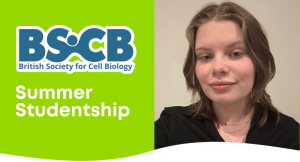
We are so excited to introduce you to the student whose mitochondrial research project we are funding this summer through a studentship in collaboration with the British Society for Cell Biology!

Hannah will be working in the lab at the University of Liverpool, looking at TMEM11, a gene that encodes a critical mitochondrial protein involved in mitochondrial organisation, morphogenesis, and mitophagy (the selective degradation of damaged mitochondria).

Mission Activity Highlights

It’s been amazing to see some brilliant activity across our missions, raising vital awareness and funds for mito!

​

Regan’s Mito Mission, Cradley Heath

Some very brave fundraisers took on the huge challenge of climbing Snowdon blindfolded, to raise funds for Regan’s Mission and their U12s girls

football team!​

The team said, “The conditions, the cold, the wind and the rain pushed every single one of us to the limit. For those of us who’ve done this

climb before, this was without doubt the toughest we’ve ever experienced. Every single person gave absolutely everything they had,

and that says everything about our team.

We took on this challenge to support a cause rooted in real, daily struggles. To raise awareness of something that many families live with every

single day, often behind the scenes. Regan… this was for you. You were with us every step of the way.”

Support their fundraiser here: https://www.justgiving.com/crowdfunding/u12girls​

Mission Activity Highlights

Missions ou and aboutIt’s been amazing to see some brilliant activity across our missions, raising vital awareness and funds for mito!

Regan’s Mito Mission, Cradley Heath

Some very brave fundraisers took on the huge challenge of climbing Snowdon blindfolded, to raise funds for Regan’s Mission and their U12s girls football team!​

The team said, “The conditions, the cold, the wind and the rain pushed every single one of us to the limit. For those of us who’ve done this climb before, this was without doubt the toughest we’ve ever experienced. Every single person gave absolutely everything they had, and that says everything about our team.

We took on this challenge to support a cause rooted in real, daily struggles. To raise awareness of something that many families live with every single day, often behind the scenes. Regan… this was for you. You were with us every step of the way.”

Support their fundraiser here: https://www.justgiving.com/crowdfunding/u12girls​ 

Regan's MM fundraising


Aria’s Mito Mission, Bradford

Aria’s auntie brought along their MitoTed to raise awareness and as a little good luck charm for a cheerleading competition! Merchandise can be

such a good way to spark a conversation about mito and MitoTed is such a bright little cutie, he’s hard to ignore! You can buy your own MitoTed

here: https://www.mymitomission.uk/product/my-mito-ted-on-a-mission/​ 

Aria's MM awareness raising


Milanna’s Mito Mission, Nottingham

Malaky, dad to Milanna who devastatingly passed away aged just 2 years old, is raising funds to climb Kilimanjaro in memory of his daughter

and to support three charities including Milanna’s Mission.

“My little girl was my entire world, and I want to keep her legacy alive by honouring her name and turning my pain into purpose.” said Malaky.

Support their fundraising here: https://www.justgiving.com/crowdfunding/malaky-eshelby-kilimanjaro​ 

milanna with parents


Merryweathers’ Mito Mission, Birmingham

The Merryweather family have been raising vital awareness of mitochondrial disease out and about! Claire Merryweather and her son George,

and possibly their other two children Matilda and Daisy, are impacted in the family. George and his dad Gregg love to go out fishing,

so have been taking their mission leaflets with them and handing out free bait to raise awareness amongst their fishing community!

Well done guys!

Merryweathers MM fundraising


Laura’s Mito Mission, Northwich

Laura Hunt very sadly passed away aged 24 in 2021 to mitochondrial disease. Her best friend, Nina, is swimming 1096 lengths (approx. 13,152m)

to raise funds and awareness for Laura’s mission, with the aim of reaching her goal of £2000 before what would have been Laura’s 30th birthday

birthday on the 21st.

Find out more and support her here: https://www.justgiving.com/page/nina-collins-swim-challenge-lauras-mito-mission​

Laura's MM fundraising