World Mitochondrial Disease Awarness Week 2026 Round Up

What an incredible week we’ve all had in the mito community, powering awareness for mitochondrial disease and connecting with others impacted across the UK.

Just some of what we had going on at My Mito Mission included Glow Walks, attending Patient Information Days at Newcastle and Oxford, lighting up over 30 buildings in green, providing free Light Up For Mito candle holders and glow sticks, Facebook frames, and of course lots of mission activity! All incredible to see and so powerful

World Mito Week Round Up 2026

What an incredible week we’ve all had in the mito community, powering awareness for mitochondrial disease and connecting with others impacted across the UK.

Just some of what we had going on at My Mito Mission included Glow Walks, attending Patient Information Days at Newcastle and Oxford, lighting up over 30 buildings in green, providing free Light Up For Mito candle holders and glow sticks, Facebook frames, and of course lots of mission activity! All incredible to see and so powerful.

Facebook frame Singh Family
Light Up For Mito Facebook Frame - The Singh Family
Glow walk Christine
Christine's Mito Mission on a Glow Walk
Candle Paul MM
Paul lit his Light Up For Mito candle
Glow walk Emma & Eddie
Eddie & Emma's Mito Mission at end of Glow Walk
Light up Lillia
Meadowhall Shopping Centre lit up for Lillia's Mission
Hull light up Ezra
Hull City Hall lit up for Ezra's Mission
Huddersfield Uni Eddie MM
Huddersfield University lit up for Eddie's Mission
Merry Hill lit up regan
Merry Hill Shopping Centre lit up for Regan's Mission
Oxford Patient Day SJMM
Christine & Steph at Oxford Patient Information Day
Newcastle Patient Day Eddie
Ash & Eddie at Newcastle Patient Information Day

Free Light Up For Mito Tealight Holders!

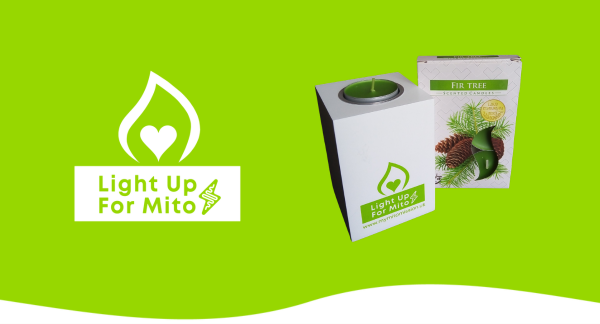
To help raise awareness this World Mito Week, we have a limited number of our Light Up for Mito tealight holders and tealights available to give away for free to anybody who wants to help us raise awareness of mitochondrial disease!

We hope these little lights will help start conversations about an illness that is still far too often misunderstood, overlooked or unheard of.

Whether you live with mitochondrial disease, support someone who does, or simply want to help us spread the word, we’d love for you to apply.

As quantities are limited, completing the form does not guarantee that you will receive one. We’ll contact successful applicants. Please only apply for one per household. UK only.

Free Light Up For Mito Tealight Holders!

Free candle holder

To help raise awareness this World Mito Week, we have a limited number of our Light Up for Mito tealight holders and tealights available to give away for free to anybody who wants to help us raise awareness of mitochondrial disease!

We hope these little lights will help start conversations about an illness that is still far too often misunderstood, overlooked or unheard of.

Whether you live with mitochondrial disease, support someone who does, or simply want to help us spread the word, we’d love for you to apply.

As quantities are limited, completing the form does not guarantee that you will receive one. We’ll contact successful applicants. Please only apply for one per household. UK only.


World Mitochondrial Disease Week and Light Up For Mito

World Mito Week is approaching, a global event which raises awareness of mitochondrial disease among doctors and the general public, and aims to improve the lives of people affected by mito.

It is an initiative of International Mito Patients (IMP) which unites mito patient organisations around the world to lead a global mito movement, and we get involved every year by asking buildings across the UK to light up in green to raise awareness, joining the campaign on social media, and organising our Glow Walks (more details above!)

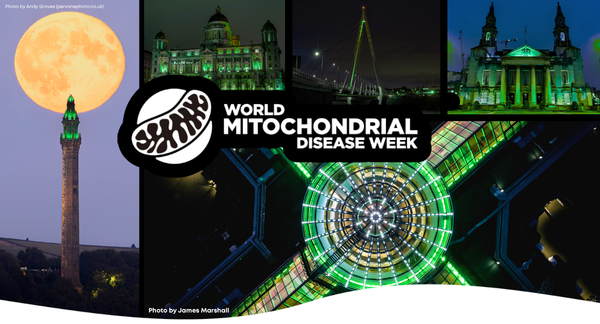
Light Up For Mito (LUFM) is an awareness campaign which takes place on the Saturday of World Mito Week (19th September this year!). Each September, many monuments, landmarks and buildings light up green to raise awareness, and My Mito Mission take part in the campaign each year by encouraging buildings across the UK to join in!

We’re also co-ordinating with International Mito Patients to have all the buildings added to their global map of mito awareness, which will be a fantastic show of the strength of this community around the world.

If there’s any buildings local to you that you think could light up green for mito, we’re happy to provide a template of what to ask them if needed, or let us know if you’d like us to contact them for you! Head to the webpage linked below to see the most up-to-date list of buildings lighting up…

World Mitochondrial Disease Week & Light Up For Mito

World Mito Week

World Mito Week is approaching, a global event which raises awareness of mitochondrial disease among doctors and the general public, and aims to improve the lives of people affected by mito.

It is an initiative of International Mito Patients (IMP) which unites mito patient organisations around the world to lead a global mito movement, and we get involved every year by asking buildings across the UK to light up in green to raise awareness, joining the campaign on social media, and organising our Glow Walks (more details above!)

Light Up For Mito (LUFM) is an awareness campaign which takes place on the Saturday of World Mito Week (19th September this year!). Each September, many monuments, landmarks and buildings light up green to raise awareness, and My Mito Mission take part in the campaign each year by encouraging buildings across the UK to join in!

We’re also co-ordinating with International Mito Patients to have all the buildings added to their global map of mito awareness, which will be a fantastic show of the strength of this community around the world.

If there’s any buildings local to you that you think could light up green for mito, we’re happy to provide a template of what to ask them if needed, or let us know if you’d like us to contact them for you! Click here to see the most up-to-date list of buildings lighting up.


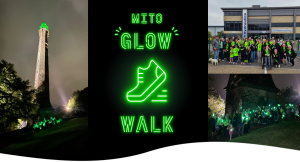
Mito Glow Walk 2026!

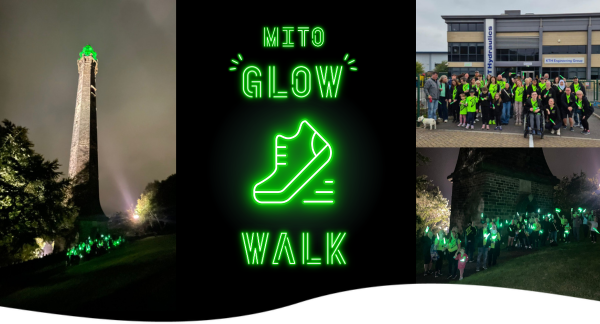
Our Glow Walk awareness-raising event for World Mito Week is back! On the evening of Saturday 19th September, don your ‘glowiest’, green outfit (if you wish) and join us to raise awareness of mitochondrial disease in Halifax and beyond.

For those impacted by mitochondrial disease, awareness is so vital. Living with a little-known illness can be very isolating, and events like these show the mito community that there are lots of people out there who care.

Walk with us from Tesco Haugh Shaw Road, loop around Halifax and back to Wainhouse Tower, which will be lit up green for World Mito Week! We’re meeting at 6pm for 6:30pm set off. Please fill in the form linked below to RSVP, so we know how many glow sticks we need! Contact us with any questions.

We hope to see you there!

Not local? You can organise your own glow walk very easily – just pick a route, as short or as long as you’d like, order some of our glow sticks (for free!) and bring your family & friends along! Whether it’s just you and your household, or a whole group, you’ll be helping us to raise awareness of mitochondrial disease across the nation.

World Mito Week Round Up 2026

Glow walk news

Our Glow Walk awareness-raising event for World Mito Week is back! On the evening of Saturday 19th September, don your ‘glowiest’, green outfit (if you wish) and join us to raise awareness of mitochondrial disease in Halifax and beyond.

For those impacted by mitochondrial disease, awareness is so vital. Living with a little-known illness can be very isolating, and events like these show the mito community that there are lots of people out there who care.

Walk with us from Tesco Haugh Shaw Road, loop around Halifax and back to Wainhouse Tower, which will be lit up green for World Mito Week! We’re meeting at 6pm for 6:30pm set off. Please fill in the form to RSVP, so we know how many glow sticks we need! Contact us with any questions.

We hope to see you there!

Not local? You can organise your own glow walk very easily – just pick a route, as short or as long as you’d like, order some of our glow sticks (for free!) and bring your family & friends along! Whether it’s just you and your household, or a whole group, you’ll be helping us to raise awareness of mitochondrial disease across the nation.

Great Run Successes

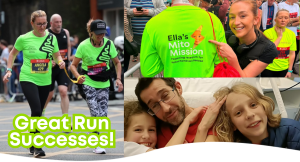
So many of our missions and supporters have done an incredible job raising awareness and funds with their charity places in the Great Manchester 10k and Great Bristol Run which took place in May, and the Great North and Great Scottish Runs which are coming up in Autumn!

A big shoutout and congratulations to Ella’s parents, Hannah & Darragh, and their friends Leanne and Mike who all ran in the Great Bristol Run in May and raised a huge £4,380 for Ella’s Mito Mission and Children’s Hospice South West. Ella spent the final 2 weeks of her life at the hospice, and the family were able to make the very most of their time together thanks to the wonderful facilities and staff there. Well done to all involved – an amazing legacy for such a beautiful little girl.

You can read Ella’s story and support her mission here:

We are so incredibly proud of our Great Manchester 10k entrant Paula who not only completed the race despite her vision loss, heart problems and fatigue as a result of having mitochondrial disease, but also raised some absolutely amazing awareness and raised over £750! Paula said, “For many, a 10k is just a run. For me, it is proof that mitochondrial disease does not define me – and a chance to make a difference for others living with this condition.” So inspiring!

Hear Paula speak at a Great Run press event here:

Finally, we want to highlight just one of our amazing runners for the Great North Run with a very important, personal reason for running. Nicola’s husband Ross had a stroke and several repeated seizures in 2018. Over the past 4 years, symptoms slowly crept in such as heart failure, hearing loss, type 2 diabetes, fatigue, vision problems and more, and Ross was finally diagnosed with MELAS, a form of mitochondrial disease, in late 2025.

Nicola is running in the half marathon and their kids Charlie and Florence are taking part in the Junior 4km run, all to raise awareness and funds for their husband/dad’s illness. They’ve already raised a fantastic £800 – the link to support them is here:

Welcoming Christine's Mito Mission!

So many of our missions and supporters have done an incredible job raising awareness and funds with their charity places in the Great Manchester 10k and Great Bristol Run which took place in May, and the Great North and Great Scottish Runs which are coming up in Autumn!

A big shoutout and congratulations to Ella’s parents, Hannah & Darragh, and their friends Leanne and Mike who all ran in the Great Bristol Run in May and raised a huge £4,380 for Ella’s Mito Mission and Children’s Hospice South West. Ella spent the final 2 weeks of her life at the hospice, and the family were able to make the very most of their time together thanks to the wonderful facilities and staff there. Well done to all involved – an amazing legacy for such a beautiful little girl.

You can read Ella’s story and support her mission here.

We are so incredibly proud of our Great Manchester 10k entrant Paula who not only completed the race despite her vision loss, heart problems and fatigue as a result of having mitochondrial disease, but also raised some absolutely amazing awareness and raised over £750! Paula said, “For many, a 10k is just a run. For me, it is proof that mitochondrial disease does not define me – and a chance to make a difference for others living with this condition.” So inspiring!

Finally, we want to highlight just one of our amazing runners for the Great North Run with a very important, personal reason for running. Nicola’s husband Ross had a stroke and several repeated seizures in 2018. Over the past 4 years, symptoms slowly crept in such as heart failure, hearing loss, type 2 diabetes, fatigue, vision problems and more, and Ross was finally diagnosed with MELAS, a form of mitochondrial disease, in late 2025.

Nicola is running in the half marathon and their kids Charlie and Florence are taking part in the Junior 4km run, all to raise awareness and funds for their husband/dad’s illness. They’ve already raised a fantastic £800 – the link to support them is here.


BSCB Summer Mitochondrial Research Studentship

What an incredible week we’ve all had in the mito community, powering awareness for mitochondrial disease and connecting with others impacted across the UK.

Just some of what we had going on at My Mito Mission included Glow Walks, attending Patient Information Days at Newcastle and Oxford, lighting up over 30 buildings in green, providing free Light Up For Mito candle holders and glow sticks, Facebook frames, and of course lots of mission activity! All incredible to see and so powerful

BSCB Summer Mitochondrial Research Studentship

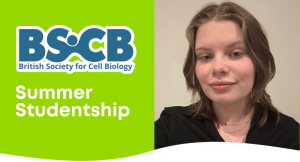
We are so excited to introduce you to the student whose mitochondrial research project we are funding this summer through a studentship in collaboration with the British Society for Cell Biology!

Hannah will be working in the lab at the University of Liverpool, looking at TMEM11, a gene that encodes a critical mitochondrial protein involved in mitochondrial organisation, morphogenesis, and mitophagy (the selective degradation of damaged mitochondria).

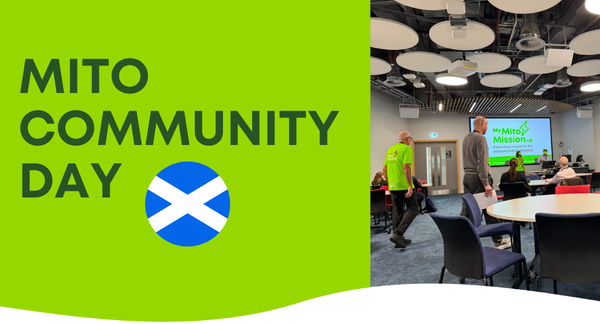
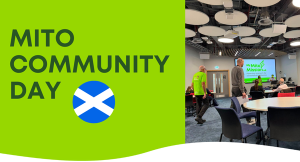
Our first ever Mito Community Day in Glasgow!

With people from the mito community and some of the top mitochondrial researchers travelling from all over to attend, we were thrilled to see information being shared, people meeting for the first time, and the sense of community in the room.

We all have the same goals – to find treatments and a cure for mitochondrial disease, and power awareness & support for those affected. Events like these are where we can hear from everyone working to make that happen, and understand different perspectives on how we’ll get there.

Thank you to all involved – we’re so glad to be able to organise these kinds of events, and we couldn’t do it without you!

Thank you to our missionee Danielle for the photos.

Our First Ever Mito Community Day in Glasgow!

On Saturday 20th June, we’re inviting the mitochondrial disease community to join us for a day of

learning, connection and networking hosted by the University of Glasgow. This includes anyone with a diagnosis and anyone with a loved one

who has, or had a diagnosis. It’s free to attend, and lunch/refreshments will be provided. A travel fund will be available.

​

Please fill in the form here to register: tinyurl.com/glasgow-mito​

​

Any questions, just get in touch! We hope to see many of those impacted by mito there.

Our First Ever Mito Community Day in Glasgow!

Scottish day

On Saturday 20th June, we’re inviting the mitochondrial disease community to join us for a day of learning, connection and networking hosted by the University of Glasgow. This includes anyone with a diagnosis and anyone with a loved one who has, or had a diagnosis. It’s free to attend, and lunch/refreshments will be provided. A travel fund will be available.

​Please fill in the form here to register.

​Any questions, just get in touch! We hope to see many of those impacted by mito there.

Glasgow Event Poster

Mitochondria Explained by Natalie Denham

Mitochondria explained

TL;DR
✓ Mitochondria generate most of the cell’s energy and regulate essential processes in the body such as metabolism, calcium balance, and cell death.
✓ Their structure, especially the inner membrane and cristae, enables efficient ATP production. ATP is the primary energy currency of our cells, it provides fuel needed to power our movement, growth, and repair within the body, all of which are essential biological functions.
✓ Mitochondria constantly reshape themselves through fusion and fission, to maintain quality and adapt to stress.
✓ Disruptions in mitochondrial dynamics are linked to major diseases, including neurodegenerative disorders like Amyotrophic Lateral Sclerosis (ALS), Parkinson’s disease, and Alzheimer’s disease, and metabolic disorders like type 1 diabetes, non-alcoholic fatty liver (NAFLD), and myopathies like Leigh syndrome and Kearns-Sayre syndrome.

Mitochondria Explained by Natalie Denham

Mitochondria explainedOverview:

✓ Mitochondria generate most of the cell’s energy and regulate essential processes in the body such as metabolism, calcium balance, and cell death.

✓ Their structure, especially the inner membrane and cristae, enables efficient ATP production. ATP is the primary energy currency of our cells, it provides fuel needed to power our movement, growth, and repair within the body, all of which are essential biological functions.

✓ Mitochondria constantly reshape themselves through fusion and fission, to maintain quality and adapt to stress.

✓ Disruptions in mitochondrial dynamics are linked to major diseases, including neurodegenerative disorders like Amyotrophic Lateral Sclerosis (ALS), Parkinson’s disease, and Alzheimer’s disease, and metabolic disorders like type 1 diabetes, non-alcoholic fatty liver (NAFLD), and myopathies like Leigh syndrome and Kearns-Sayre syndrome.

Introduction

Mitochondria are essential parts of cells which are found in nearly all human cells, and are responsible for producing energy in the form of adenosine triphosphate (ATP), the molecule that powers most cellular processes.

Modern research shows that the mitochondria also regulate cell survival, metabolic signalling, and inflammation in the body.
They are known as the ‘powerhouses of the cell’, and their importance is highlighted when exploring defects in mitochondrial function, which contributes to a wide range of human diseases.

Origin

Several billion years ago, a large primitive cell engulfed a smaller bacterium, and instead of the cell digesting it, the bacterium survived and supported the host cell by producing energy.

The two became dependant on one another for survival. This relationship is called a symbiotic relationship, and through the course of evolution, this bacteria became what we now know as mitochondria.

Mitochondrial Structure

Mitochondria have a distinctive double membrane. The outer membrane encloses the mitochondria, protecting it and maintaining the internal environment, whilst the inner membrane folds into cristae, which are the tightly folded structures that increase the available surface area for chemical reactions to occur between proteins and enzymes to generate ATP.

This dramatically increases the surface area for ATP synthesis. The cristae contain protein complexes that generate ATP through a process called oxidative phosphorylation. The internal compartment, called the matrix, contains mitochondrial DNA (mtDNA) and ribosomes; these aspects were conserved from the bacterial ancestor species they descended from. Human mitochondrial DNA contains 37 genes, and 13 of these genes make proteins required for the electron transport chain, the system that converts oxygen and sugar into usable energy for the cells. The other 24 genes produce RNA tools needed for protein synthesis: transfer (tRNA) and ribosomal (rRNA), and together the tRNA and rRNA help the mitochondria make proteins. The tRNA are helpers that deliver amino acids to the ribosomes, and the rRNA form the structural core of ribosomes. The core functions as the ‘workbench’ and the ‘machinery’ that assembles proteins from amino acid building blocks.

Core Functions of Mitochondria

1. Energy Production

The primary energy currency used by most human tissues is ATP. The mitochondria produce ATP through oxidative phosphorylation, a multi-step process in which the electron transport chain and the resulting proton gradient across the inner mitochondrial membrane drive the conversion of adenosine diphosphate (ADP) into ATP, the cell’s usable energy. In mitochondria, electrons act as fuel. As they move through the electron transport chain, their energy is used to pump protons to one side of the inner membrane which creates a high-pressure, high-concentration gradient.
This imbalance drives protons back across the membrane toward the lower concentration side to restore balance. Protons flow through a narrow channel inside an enzyme called ATP synthase. This enzyme acts like a tiny rotary turbine, as the directed proton flow makes the molecular turbine rotate, and that rotation powers the ATP synthase to attach a phosphate group to ADP, producing ATP.

2. Calcium Regulation

Mitochondria buffer intracellular calcium to prevent toxic overload and maintain normal signalling pathways. They remove excess calcium when concentrations rise, preventing toxic overloads, and release it in controlled amounts to support normal cell signalling pathways such as muscle contraction and hormone release.

3. Apoptosis and Cell Fate

Mitochondria release signalling molecules that co-ordinate the removal of damaged or unnecessary cells through controlled apoptosis, known as programmed cell death. A cell has a built-in self-destruct programme so it can disappear without harming nearby healthy cells. If a cell accumulates too much DNA damage rendering it incapable of safe repair, the mitochondria will trigger apoptosis to prevent cells from becoming cancerous due to mutations.

4. Metabolism

Mitochondria influence whole-body metabolic health through participation in amino acid metabolism, lipid oxidation and synthesis of key biomolecules. They break down amino acids to supply materials needed for energy production and cellular repair, and fatty acids are broken down to fuel ATP generation, and synthesise essential molecules. One of these is heme, which is the component of haemoglobin that enables red blood cells to carry oxygen throughout the body.

Mitochondrial Dynamics: Fusion, Fission and Quality Control

Mitochondria continually undergo processes that help maintain their shape and function. Fusion is the merging of two mitochondria, allowing them to share contents and dilute any damage. This maintains a healthy mitochondrial network for efficient ATP production. Fusion enables cells to adapt to metabolic demands during stress or high-energy activity.

Fission is the division of one mitochondrion into two, isolating any damaged fragments as part of quality control within a cell. During cell division, which is how your body makes new cells, fission ensures new cells receive sufficient mitochondria so tissues can repair and renew themselves, keeping them functioning properly. The damaged mitochondrial fragments are removed through mitophagy, a specialised form of cell cleaning that occurs whilst the cell is alive. Think of it as cellular ‘spring cleaning’. Disruptions in mitophagy are associated with neurodegenerative diseases and metabolic disorders, meaning effective mitochondrial quality control is central to preventing disease and maintaining normal cellular function.

Why This Matters for Human Health Research

Understanding the structure, function, and dynamics of mitochondria is essential for therapeutic research into how mitochondrial quality control mechanisms can be leveraged to restore healthy mitochondrial networks. Mitochondrial dysfunction contributes to conditions such as Parkinson’s disease, diabetes, and cardiovascular disorders, to name a few. This is because the mitochondria influence energy metabolism, inflammation, and cell survival. As research continues, the mitochondria remain central to understanding human biology and disease.

Disclaimer 

This article is for general information purposes only and should not be taken as medical advice. For concerns about health or disease, consult a qualified healthcare professional.

References

Al Ojaimi, M., Salah, A. & El-Hattab, A.W. (2022) Mitochondrial fission and fusion: molecular
mechanisms, biological functions, and related disorders. Membranes, 12(9).

Biology Insights (2025) Mitochondrial genes: function, inheritance, and impact. Available at:
https://biologyinsights.com/mitochondrial-genes-function-inheritance-and-impact/ (Accessed:
6 February 2026).

Green, A., Hossain, T. & Eckmann, D.M. (2022) Mitochondrial dynamics involves molecular
and mechanical events in motility, fusion and fission. Frontiers in Cell and Developmental
Biology, 10.

Hong, W-L., Huang, H., Zeng, X. & Duan, C-Y. (2024) Targeting mitochondrial quality
control: new therapeutic strategies for major diseases. Military Medical Research, 11(59).
Tábara, L-C., Segawa, M. & Prudent, J. (2024) Molecular mechanisms of mitochondrial
dynamics. Nature Reviews Molecular Cell Biology.

Thompson, S. (2024) Mitochondrial dynamics: understanding the balance between fusion
and fission. Cellular and Molecular Biology, 70(5).


My Mito Mission at the Mitochondrial Disease Patient Info Day in Newcastle!

We were absolutely delighted to attend the Newcastle Mito Patient Information Day!
We spent the day meeting and connecting with families impacted by mito, researchers and medical professionals working hard to improve the quality of life and care for mito patients, and our incredible fellow charities & organisations: The Lily Foundation, who we’ve collaborated with in our research funding previously, The Noah Jordan Foundation, a recently formed paediatric mitochondrial disease charity, and Muscular Dystrophy UK.
We took the opportunity to continue promoting our free medical alert wristbands for mito patients, designed to provide a little peace of mind. Anybody with a diagnosis of mitochondrial disease can order one online for themselves or on behalf of their loved one (UK only).
A big thank you to all the brilliant organisers of this event, and to all who attended! It was amazing to meet so many different families and hear their stories, and to discuss collaborations and developments with research specialists.
Why not follow our social media pages for more updates and insights from the day, and on our charity activities?
You can also subscribe to our e-Newsletter below…

My Mito Mission at the Mitochondrial Disease Patient Info Day in Newcastle!

Mito Patient Info Day news image

We were absolutely delighted to attend the Newcastle Mito Patient Information Day! 

We spent the day meeting and connecting with families impacted by mito, researchers and medical professionals working hard to improve the quality of life and care for mito patients, and our incredible fellow charities & organisations: The Lily Foundation, who we’ve collaborated with in our research funding previously, The Noah Jordan Foundation, a recently formed paediatric mitochondrial disease charity, and Muscular Dystrophy UK.

We took the opportunity to continue promoting our free medical alert wristbands for mito patients, designed to provide a little peace of mind. Anybody with a diagnosis of mitochondrial disease can order one online for themselves or on behalf of their loved one (UK only).

A big thank you to all the brilliant organisers of this event, and to all who attended! It was amazing to meet so many different families and hear their stories, and to discuss collaborations and developments with research specialists.

Why not follow our social media pages for more updates and insights from the day, and on our charity activities?

You can also subscribe to our e-Newsletter below…